Why families wait too long — and what it costs them
Almost every Baton Rouge family we serve waits longer than they should. The reasons are understandable — denial, hope, the fear of admitting things have changed, the worry about cost, the assumption that needing memory care means moving to a facility. The cost of waiting is rarely abstract. It usually shows up as a fall and an emergency room visit, a medication error and a hospital stay, a wandering incident in summer heat, or a primary family caregiver who has slid into depression and exhaustion. Acting earlier is cheaper, calmer, and almost always safer than waiting for the crisis that forces the conversation.
Sign 1: Wandering or getting lost
When a senior with dementia repeatedly walks toward the front door, asks to go home while already at home, or attempts to drive without keys, the safety calculus has changed. Wandering and elopement are among the most dangerous behaviors in dementia, and in Baton Rouge — where summer heat alone makes elopement dangerous within minutes — this is one of the most urgent signs to act on. A trained memory care plan addresses wandering through engagement, environmental cues (curtains over the front door, motion alerts at exits), a predictable schedule, and caregivers who recognize the early restlessness before the person reaches the door.
Sign 2: Sundowning that's wearing the family down
Sundowning — the late-afternoon and early-evening confusion, restlessness, and agitation common in dementia — is one of the earliest reasons Baton Rouge families call us. When sundowning becomes daily and starts affecting sleep, eating, and the spouse's own mental health, dedicated memory care is usually the next step. The right response is structural: a calm familiar caregiver present through the transition, lighting warmed by 4 p.m., a predictable evening sequence, and avoidance of stimulating activities or surprise visitors at that hour.
Recognize these signs? Don't wait until crisis. Let's talk.
Signs 3-5: Bathing refusal, medication mistakes, kitchen safety
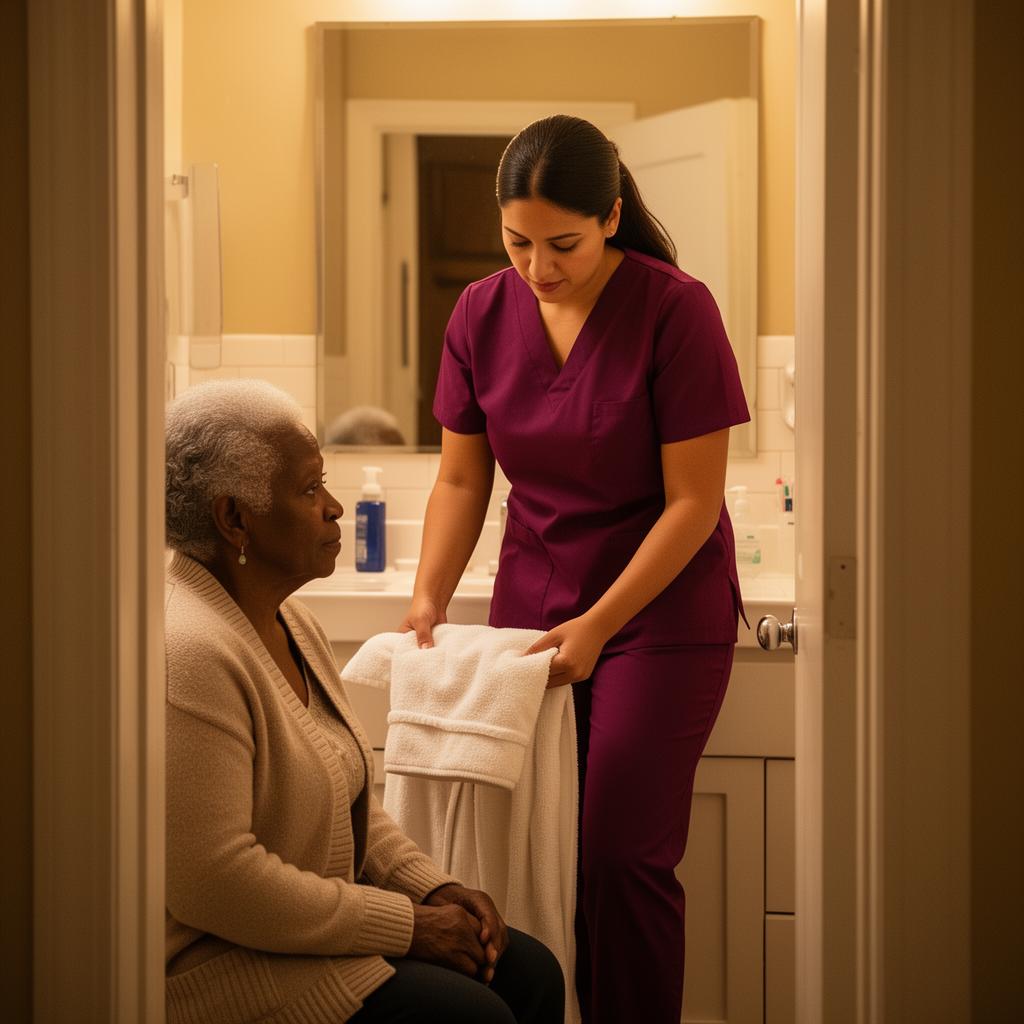
The third sign is bathing refusal that has become a battle. Bathing is the most physically risky activity of daily living, and a person with dementia who refuses it is rarely being stubborn — they are confused, cold, afraid of falling, or unable to understand what is being asked. The fourth sign is medication errors despite a pill organizer. When the weekly organizer stops working — pills missed, doubled, or moved between days — the senior is no longer safe to self-administer. Aging Gracefully brings clinical expertise, our memory care plans include a medication review and a caregiver-administered reminder routine that meets Louisiana home care regulations. The fifth sign is kitchen safety: a stove left on, food left out for days, scorched pots, or a microwave used in ways that don't make sense. Together, these three signs point to mid-stage dementia and a clear need for trained memory care presence.
Signs 6-7: Caregiver collapse, fall + injury
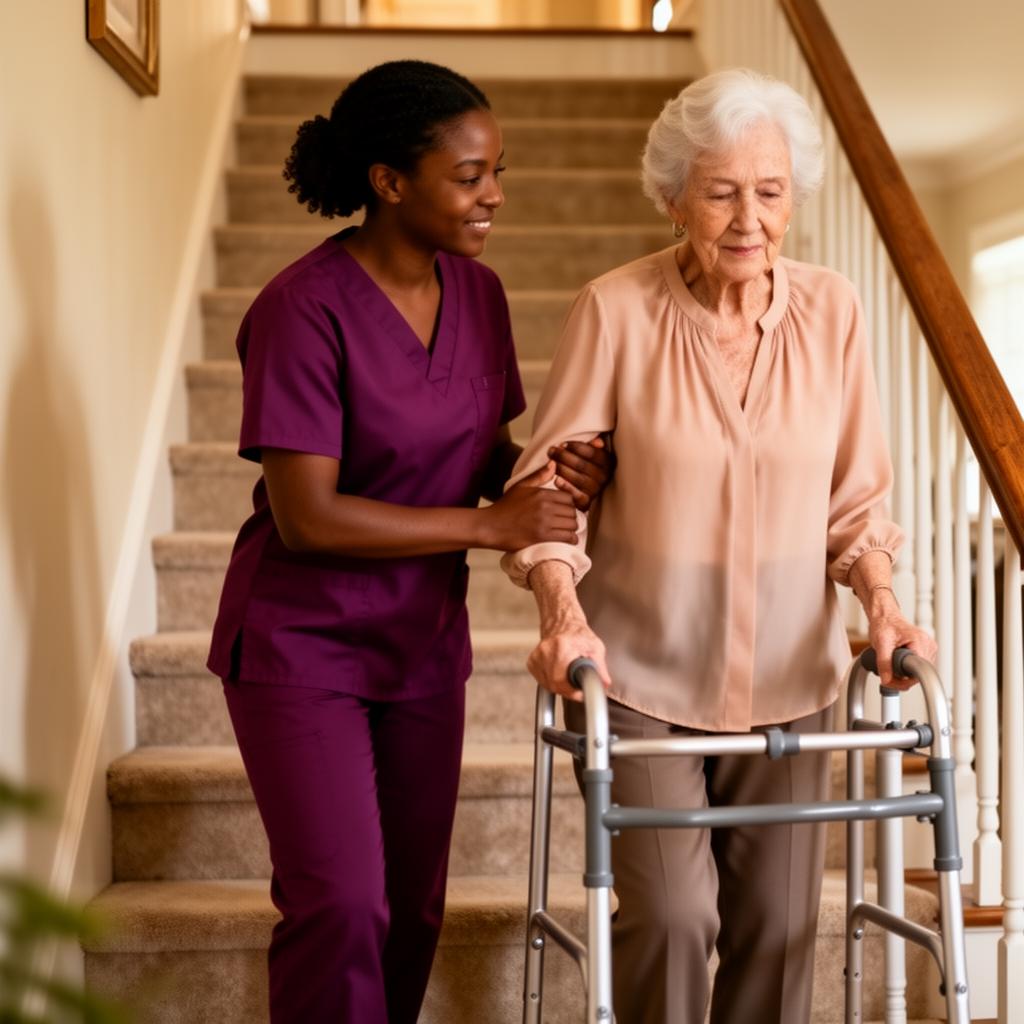
The sixth sign is the primary family caregiver — usually a spouse or adult daughter — visibly breaking. Sleep deprivation, weight change, snapping at the loved one, missed doctor appointments of their own, signs of caregiver depression. When the caregiver is breaking, that is its own emergency, and it is medically urgent to relieve them. The seventh sign is a first fall with injury. Falls in dementia are rarely isolated; the second fall is usually worse than the first. A fall with a fracture or a head injury changes everything overnight — and the families who had memory care already in place at that moment fared dramatically better than those who started scrambling from a hospital room.
What to do once you see 2+ signs
- Pick the two signs you've seen most clearly and write down three recent examples of each, with dates.
- Call the senior's primary care physician and share the list — ask whether a referral to a neurologist or geriatrician is appropriate.
- Call the Capital Area Agency on Aging in Baton Rouge for free benefits screening and Alzheimer's program resources.
- Schedule a free in-home visit with a licensed Baton Rouge memory care provider (we offer one — no pressure).
- Read our companion guides on dementia care at home and on memory care at home vs. facility.