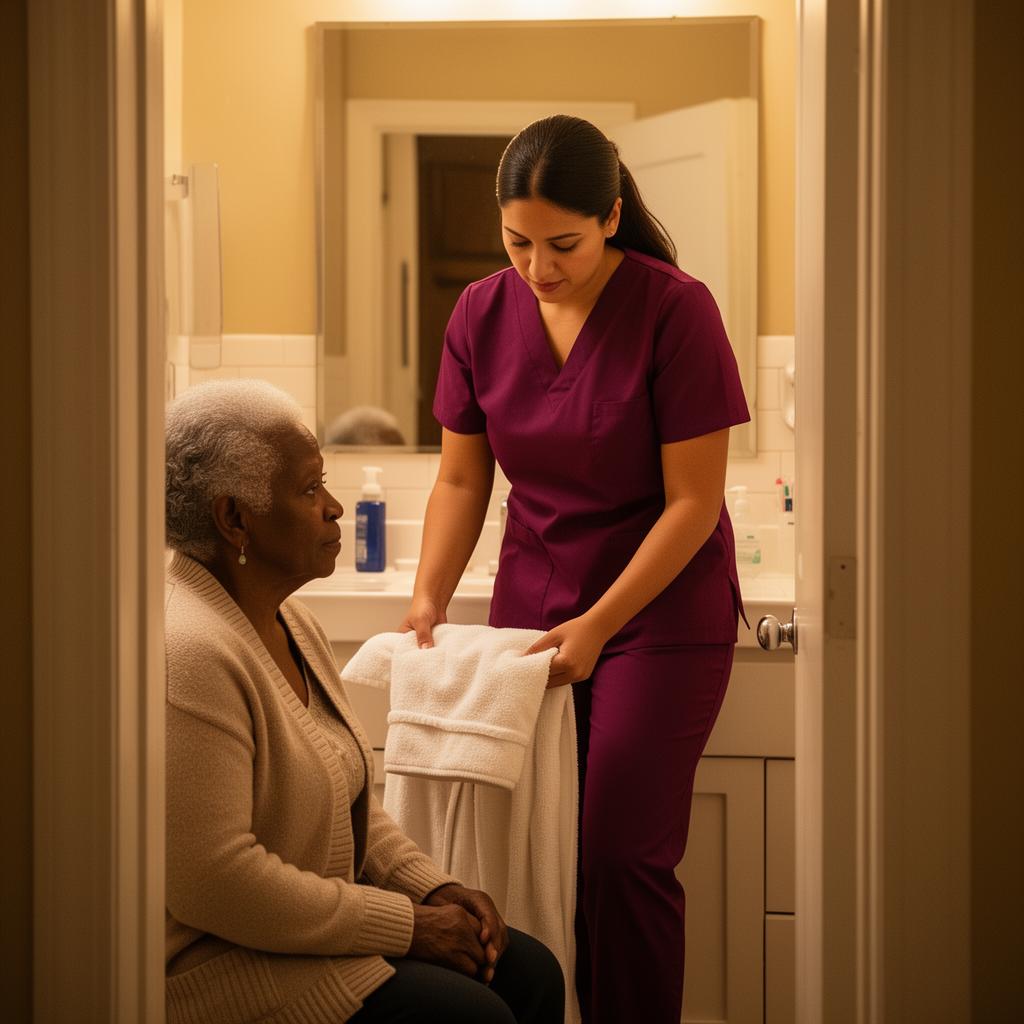

Why missed medication doses are dangerous for seniors
Most adults over 65 take five or more prescriptions, and many take ten or more once over-the-counter medications, vitamins, and as-needed pills are added in. The daily routine becomes hard for anyone to manage without a system. Missed doses, doubled doses, and timing errors are among the leading reasons older adults end up in the emergency room.
The consequences are not abstract. A skipped blood thinner can mean a stroke. A doubled blood pressure pill can mean a fall. A missed antibiotic can turn a minor infection into a hospitalization. A new sleep aid taken on top of an old anxiety medication can cause confusion that looks exactly like dementia and sends the family into a panic that is really just an interaction. Most of these are preventable with consistent reminders, an organized pillbox, and someone in the home who notices the small changes.
And it is not only the prescription list. Recent prescription changes are the highest-risk window of all. The 30 days after a hospital discharge, a doctor visit that adjusted a dose, or a new specialist adding a medication is when most serious errors happen. Our hospital-to-home recovery guide walks through the discharge medication reconciliation that prevents most of them.
What a non-medical caregiver CAN do with medications (and the legal line)
In Louisiana, non-medical home care agencies (including ours) provide medication reminders and verification. The legal term is "assistance with self-administration." The line is meaningful and clear: we support your parent's ability to take their own medications correctly, but we do not administer.
- •Remind on schedule (verbal prompt, alarm, visible cue)
- •Bring the pre-filled pillbox to your parent
- •Open the pillbox compartment or pill bottle (when they cannot)
- •Verify the dose was taken and at the right time
- •Watch for missed doses and document them for the family
- •Set up the weekly pillbox alongside the family or pharmacist
- •Track refills and notify the family before pills run out
- •Pick up prescriptions from the pharmacy and confirm they match the order
- •Notice and report side effects, new symptoms, or behavior changes
- •Coordinate with the family, the doctor's office, and the pharmacy when authorized
What a non-medical caregiver CANNOT do (this is important)
Knowing what we cannot do is just as important as knowing what we can. If your parent's needs include any of the items below, you need a licensed nurse, not a personal care attendant — and many situations are best served by both working together.
- •Pour or measure liquid medications into a syringe or cup
- •Push or place medications into your parent's mouth
- •Inject anything — insulin, blood thinners, B12, anything else
- •Manage IV lines, nebulizers used for prescribed medication, or feeding tube medications
- •Crush, split, or alter pills (unless a doctor has specifically ordered it in writing)
- •Apply medicated patches or transdermal medications without specific authorization
- •Recommend, suggest, or change any medication or dose
- •Administer controlled substances (pain medications, sleep aids, anti-anxiety medications) directly
If your parent is past the line of self-administration — they cannot reliably swallow on their own, they cannot get the pill from the pillbox to their mouth, they need injections, or they need any kind of measured liquid medication — that is when home health (with a licensed nurse) joins the team. We coordinate closely with home health when both services are involved.
Worried about meds at home? Let's talk through what's safe.
How to set up a medication system that actually works
The medication system that works is the simplest one your parent can actually run on their own — with the right backup. After a thousand home visits, the pattern that works is almost always the same:
- Print a current medication list with name, dose, time, with-or-without-food, and reason. Not handwritten. Update it after every doctor visit.
- Use a single weekly pillbox with AM/MID/PM/BEDTIME compartments. Fill it together once a week, same day every week.
- Set two reminders for each dose: a phone or watch alert and a visible physical cue (the pillbox left on the breakfast table for the morning dose, on the bedside table for evening).
- Keep one "medication home" — a single drawer, cabinet, or counter spot where every bottle lives. Nothing migrates. Old bottles get thrown away the day a medication is stopped.
- Review the full list with the doctor or pharmacist every six months, and immediately after any hospital stay, ER visit, or new specialist appointment.
- Have one person — a primary caregiver, a child, a spouse — designated as the medication point of contact. Not a rotating team.
If your parent is on more than seven medications, or any of them are blood thinners, insulin, or controlled substances, ask the pharmacy about blister-pack or daily-dose packaging. Many pharmacies in Baton Rouge will pre-package each dose into a sealed pouch labeled with the date and time. The cost is usually small and the safety improvement is dramatic.
When you need a nurse vs. a personal care attendant for meds
The honest test is the line between self-administration and administration. Use this checklist:
- •Personal care attendant is enough when: your parent can swallow on their own, can get the pill from box to mouth (with reminders or set-up help), and is on standard oral medications.
- •Nurse is required when: insulin or other injections are needed, IV medications are being given at home, sterile wound care is involved, complex measured liquids are part of the routine, or your parent cannot reliably participate in their own dosing.
- •Both are needed when: a complex post-discharge regimen requires both daily presence and intermittent skilled visits — the nurse manages the medical side, the caregiver handles the daily reminders, observation, and reporting.
Why our clinical approach matters here
Aging Gracefully was built with clinical expertise. That shapes how we train, what we look for in caregivers, and how we think about medication safety in every home we walk into.
Most home care agencies treat medication reminders as a checklist task: prompt, verify, document, move on. Our caregivers are trained to think about the medications themselves — what each one is for, what side effects to watch for, and what the warning signs of an interaction look like. That is unusual training for a non-medical caregiver, and it is the difference between a reminder service and a true safety layer.
- •Caregivers learn the most common medication classes prescribed to seniors (blood pressure, blood thinners, diabetes, sleep, anxiety, dementia medications) and the side effects each can cause
- •Special attention to medications that cause falls — many are surprising even to families (Benadryl, Tylenol PM, common bladder medications)
- •Recognition of early warning signs that mean call the family, the pharmacist, or the doctor today rather than next week
- •Clear documentation of every dose given, refused, or missed — so there is a real record when the doctor asks
- •A clinical advisor on call internally for caregiver questions about specific medications they encounter in client homes
Caregivers cannot change a prescription, but they can flag the pattern — "She gets dizzy every morning after her 8 a.m. pill" — so the family can bring it to the doctor or pharmacist. That single observation has prevented more falls and ER visits than any equipment we have ever recommended.