When driving stops being safe (and how to spot it without an argument)
A car is not transportation — it is autonomy. Doctor's appointments, the grocery store, church, lunch with a friend, a haircut, the cemetery to visit a spouse. When driving stops, every one of those becomes someone else's logistics problem, and your parent becomes dependent for the parts of life they have run themselves for 60 years. That is why driving is one of the most emotionally loaded conversations any family has.
Most families know it is time before they admit it. The signs:
- •New dents, scrapes, or a fender bender no one mentions
- •Getting lost on familiar routes — the drive home from the grocery store taking an hour
- •Slow reaction at intersections, missed stop signs, lane drifting
- •Driving too slowly, especially on highways or roads they used to handle easily
- •Family members and grandchildren refusing to ride along
- •A doctor or eye specialist has raised concerns
- •Several near misses in a short time
- •Confusion about pedals, gears, or the destination once arrived
The way to bring it up without an argument is to lead with what you have observed (not labels), to frame it as a conversation rather than a verdict, and to offer a real alternative before you ever say the word "stop." "Mom, I noticed two new scrapes on the bumper. I worry about you driving in the rain. What if I helped you set up rides for the appointments and you kept driving for the short trips you really need?" That conversation lands. "You can't drive anymore" starts a fight you will not win and may damage trust for months.
How a caregiver handles transportation without taking away independence
A caregiver-driven trip is fundamentally different from a rideshare or a friend doing a favor. It is part of the care, not separate from it. The work starts before the car: the caregiver helps your loved one get ready unhurried, brings the cane or walker or oxygen, makes sure the wallet and ID and insurance card are in the bag, and verifies the appointment time and address.
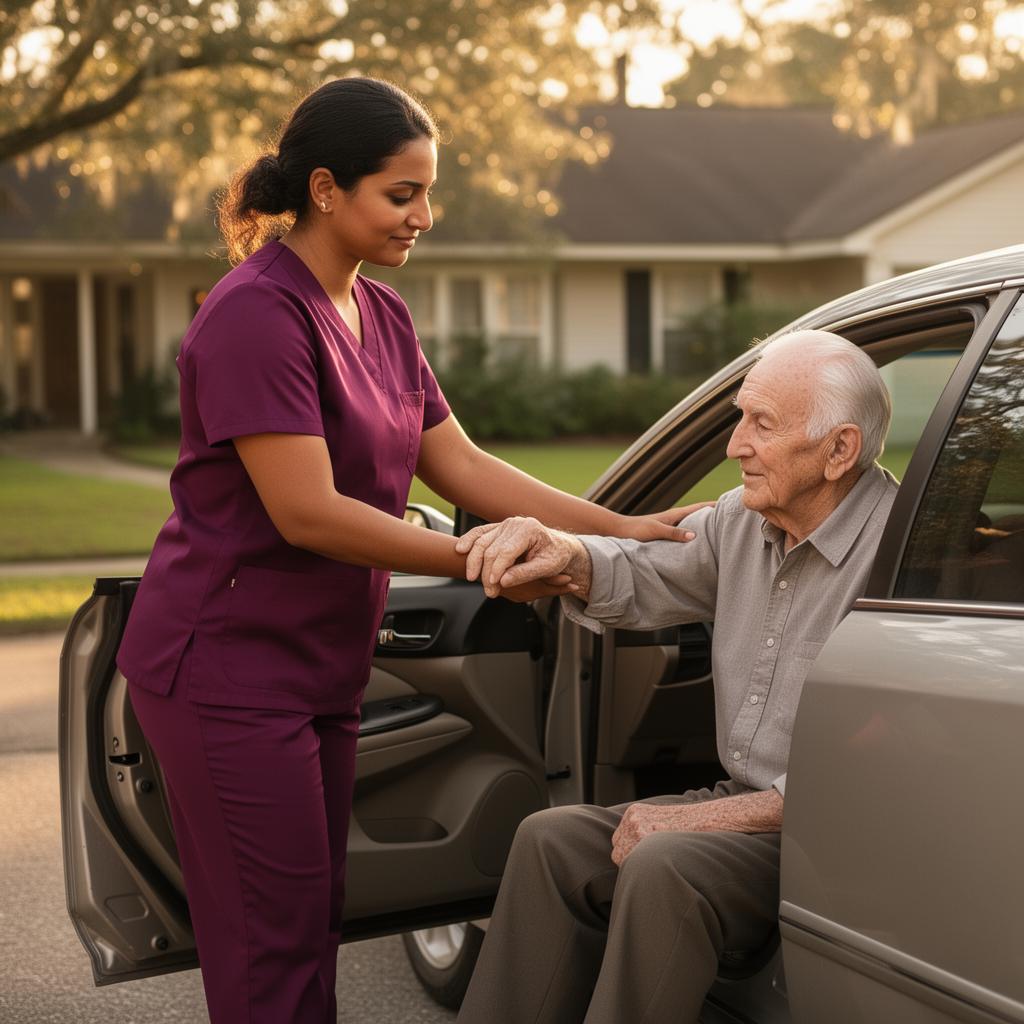
Then the trip itself is door-to-door — not curb-to-curb. The caregiver walks your parent into the building, sits in the waiting room, accompanies them into the exam room when authorized, takes notes during the visit, helps schedule the follow-up before leaving, fills any new prescriptions on the way home, and walks your parent back inside the house with the bags and the paperwork organized. Then they call the family with the update.
The same care goes into errands. The caregiver who knows your parent prefers a particular brand of bread, knows which checkout lane has the cashier she likes, knows to stop at the post office on the way back. The trip becomes a small piece of normal life rather than a logistical chore. For a senior who has lost driving, that ordinary feeling matters more than families realize.
What's covered: doctors, errands, family visits, faith services
- •Medical and dental appointments with door-through-door support
- •Pharmacy pickup and prescription drop-off
- •Grocery shopping (together or on their behalf)
- •Bank, post office, hair salon, barbershop
- •Church, temple, mosque — weekly services and special events
- •Family visits, lunches out, weddings, funerals
- •The cemetery — many of our clients visit a spouse weekly and we make sure that does not stop
- •Voting, library, museum visits
- •Adult day programs and senior center events
- •Specialty appointments outside the parish (we cover most of southeast Louisiana, including New Orleans medical centers)
Worried about driving? We can help — without losing dignity.
Veteran transportation — VA New Orleans and Alexandria appointments
For Baton Rouge area veterans, VA appointments often mean a trip to the New Orleans VA Medical Center or the Alexandria VA Health Care System. Both are real drives — 90 minutes to two hours each way — and the appointment day can stretch to eight or ten hours from leaving home to getting back. That is too much for most older veterans to do alone, and too much for most family caregivers to take off work for repeatedly.
Our caregivers regularly handle full VA appointment days: pickup at home, drive to New Orleans or Alexandria, walk the veteran into the right clinic, sit through the appointment, take notes, drive home, and stop at the pharmacy on the way. For veterans with mobility limits, we coordinate wheelchair-accessible transport when needed. Many of these trips are covered by VA benefits — Aid & Attendance, Veteran-Directed Care, and the VA Caregiver Support Program can all contribute. Our veteran benefits guide walks through what applies.
Insurance, vehicles, and how transportation actually works
Two practical questions every family asks: whose car, and is it insured?
- •Caregiver vehicle: Most of our transportation is provided in the caregiver's own vehicle, which carries commercial auto insurance covering client transport. This is the simplest option and works for most families.
- •Client vehicle: If your parent has a car they are attached to and want kept in use, we can drive it. We verify the caregiver is added to the policy or that the policy covers permissive use, depending on the situation.
- •Wheelchair-accessible transport: For clients who use a wheelchair full-time, we coordinate with accessible-vehicle services in the Baton Rouge area when our standard vehicles cannot accommodate the chair safely.
- •Mileage and fuel: Built into the hourly rate for short trips. Long trips (New Orleans, Alexandria, out-of-parish specialty appointments) may include a small mileage component, which we discuss upfront before any trip is scheduled.
How to introduce a caregiver-driver to a parent who refuses
Some parents will accept help in the home long before they will accept being driven. Driving is identity in a way few other things are, and a stranger behind the wheel of their life can feel like the loss made literal. The introductions that work tend to follow a pattern:
- Start with one specific high-stakes trip, not all transportation. "Mom, just for the cardiology appointment in New Orleans — it is too long a drive for me to take off work."
- Have your parent meet the caregiver in the home first, ideally for a non-driving visit. The face becomes familiar before the trip.
- Frame the caregiver as your help, not a replacement for your parent's independence. "This is who is helping me make sure you get there safely."
- Let your parent ride in the front seat. They are the passenger, not the patient.
- Build trust one trip at a time. Most parents who refuse driving help in the abstract become comfortable with the specific person within three or four trips.
Our guide on talking to a parent who refuses help has more on the broader conversation if your parent is resisting help across the board.