
Specialty Care · VA Benefits Accepted
Aging Gracefully Home Care
Care Worthy Of Their Service
Trauma-informed, military-aware in-home care for veterans across Baton Rouge & Surrounding Areas — and a family partner for navigating VA Aid & Attendance, the VA Homemaker / HHA Program, and Veteran-Directed Care.
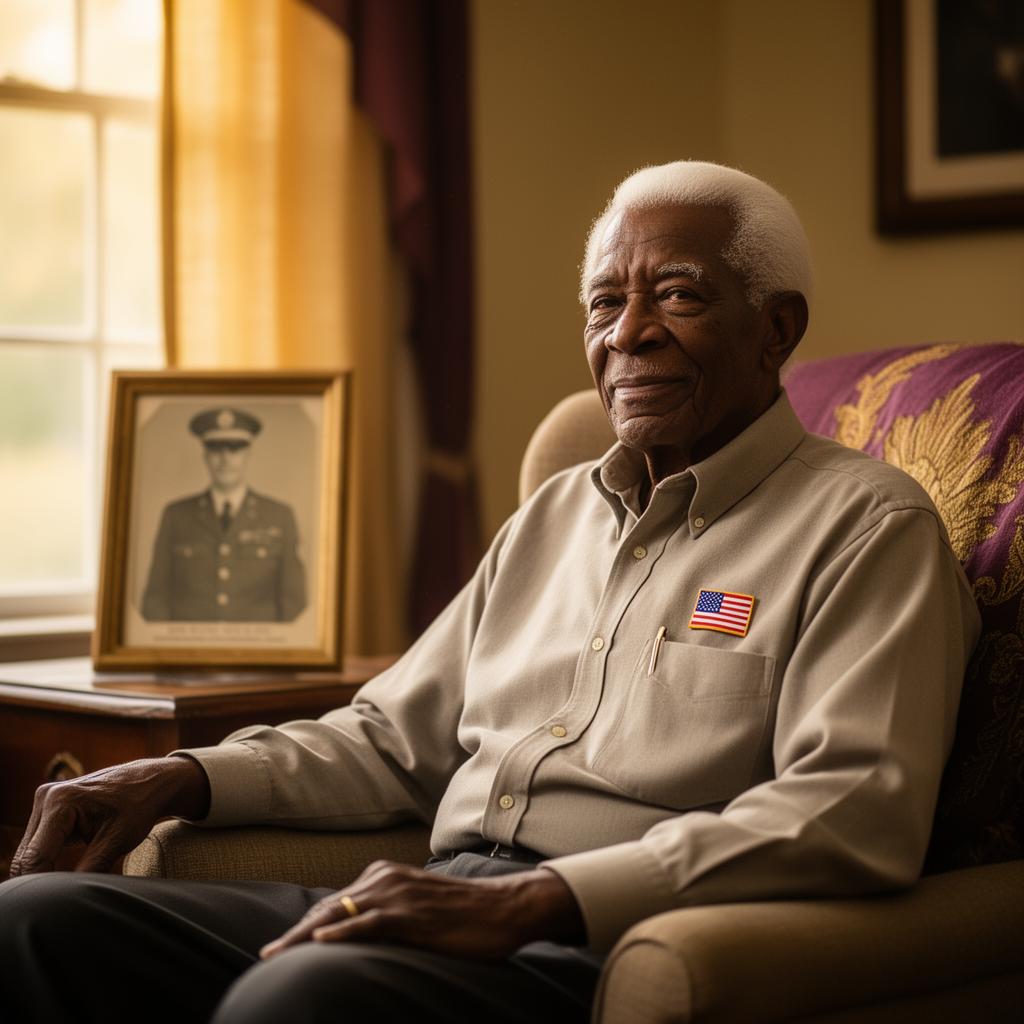
Your veteran gave years — sometimes decades — to service. They came home with stories they never told, weights they never set down, and a quiet pride that no one outside the brotherhood quite understands.
We see them. Not as patients. As the men and women who served. Our caregivers are trained to enter the home with calm, predictability, and respect — the way you'd want someone to enter your father's home, or your husband's, or your own one day.
We move slowly. We ask before we act. We honor the silences. And we never forget that this is care worthy of the service they gave.
Our Approach
Introducing Honor Care
Honor Care is our proprietary in-home framework for veterans and surviving spouses — built on trauma-informed training, predictable routines, and a family partner who actually knows the VA. Five commitments shape every visit:
1. Trauma-Informed From Day One
Every Honor Care caregiver completes PTSD-aware training before the first visit — predictable routines, quiet entry, trigger awareness, and de-escalation.
2. Same Time, Same Door, Same Caregiver
Trust takes time for veterans. We hold the caregiver match harder, plan backup matches in advance, and protect the routine your veteran depends on.
3. VA Benefits Navigator
We walk families through Aid & Attendance, the VA Homemaker / HHA Program, and Veteran-Directed Care — and coordinate directly with the Southeast Louisiana VAHCS.
4. Quiet Presence, Not Hovering
We ask before we act. We honor the silences. We give space without disengaging. The way you'd want someone to enter your father's home.
5. Cross-Trained for Memory Care
Many veterans navigate PTSD and cognitive change at once. The same trusted Honor Care caregiver supports both — new faces are particularly destabilizing.
6. Spouse and Family Respite
We see the spouse who hasn't slept through the night in years. Honor Care includes built-in respite hours so the family caregiver can breathe.
Honor Care is the proprietary veteran-informed in-home care framework of Aging Gracefully Home Care LLC.
VA Benefits
Three VA Programs Most Baton Rouge Families Don't Know About
Many wartime veterans qualify for thousands of dollars per month in benefits to pay for in-home care — and never apply because no one walks them through it. We do.
Cash benefit
VA Aid & Attendance Pension
A monthly cash benefit added to a wartime veteran's (or surviving spouse's) VA pension when they need help with bathing, dressing, eating, or toileting. Income and asset rules apply, but many families qualify and never apply.
Apply via VA.gov, the Louisiana Department of Veterans Affairs, or a free accredited Veterans Service Officer.
VA-paid in-home care
VA Homemaker / Home Health Aide Program
The VA pays a contracted home care agency directly for in-home personal care for enrolled veterans with significant care needs. Most qualifying veterans pay nothing out of pocket.
Request a Geriatrics & Extended Care referral from your Southeast Louisiana VAHCS primary care team.
Family-directed care
Veteran-Directed Care (VDC)
The veteran or family receives a VA-funded budget and chooses their own caregivers and schedule. Excellent fit for veterans who want control over who comes into the home.
Ask your VA social worker if VDC is available in your service area and how to enroll.
Eligibility and benefit amounts change. Verify current rules with the VA, the Louisiana Department of Veterans Affairs, or an accredited Veterans Service Officer.
Local Pathway
How to Apply Through the Southeast Louisiana Veterans Health Care System
- 1
Call your VA primary care team
Tell them your veteran needs help at home and ask for a Geriatrics & Extended Care referral. Specifically ask about Homemaker/HHA, Veteran-Directed Care, and Respite.
- 2
Complete the in-home or telehealth assessment
A VA social worker meets with the veteran (and ideally a family member) to evaluate activities of daily living, safety, and home environment.
- 3
Receive your authorization
If approved, the VA will authorize a number of care hours per week and either contract directly with an agency or set up a Veteran-Directed Care budget.
- 4
Choose a home care provider
If you have a choice of agencies, ask about veteran-specific training, caregiver continuity, and how they coordinate with the VA care team.
- 5
Reassess regularly
Needs change. Request a reassessment any time the situation worsens — more hours, additional services, or respite for the family caregiver may be available.
Source references: U.S. Department of Veterans Affairs (VA.gov), Southeast Louisiana Veterans Health Care System, Louisiana Department of Veterans Affairs, and the VA Caregiver Support Program.
Trauma-Informed Care
PTSD-Aware Caregiver Training
Every caregiver assigned to a veteran client completes our trauma-informed care training before the first visit. We refresh it annually and after any debrief. The training includes:
- •Predictable routines: same time, same door, same caregiver whenever possible
- •Quiet entry: no sudden movements, no loud announcements, no surprise visitors
- •Trigger awareness: fireworks, sirens, slammed doors, certain news segments
- •De-escalation: how to recognize an episode beginning and how to ground without crowding
- •Sleep-disruption support for veterans with night terrors or hypervigilance
- •Respect for the chain of command: we ask, we don't assume
- •Cross-training in memory care for veterans with cognitive change
- •Clear handoffs and family communication after every shift
What Veteran Care Looks Like With Us
- •Calm, predictable caregivers — no sudden movements or surprise visits
- •PTSD-informed routines that reduce triggers and anxiety
- •Respectful personal care — bathing, dressing, grooming with full dignity
- •Memory care for veterans navigating cognitive decline
- •Mobility assistance and fall prevention in the home
- •Companion presence — conversation when wanted, silence when needed
- •Medication reminders following the doctor's schedule
- •Coordination with VA primary care and family
- •Overnight presence for veterans with disrupted sleep
- •Respite care for the spouse or family doing it all
A Family We Walk Beside
"He Earned The Right To Feel Safe In His Own House."
Mr. R. served thirty years. He doesn't open up easily. After his stroke, the VA approved a few hours of home care a week, and his daughter called us.
The first three visits, he barely spoke. Our caregiver didn't push. She made coffee the way he liked it, sat across the room with the news on low, and let him decide when to engage. By week three, he was telling stories about basic training. By month two, he was waiting at the door for her on visit days.
"He earned the right to feel safe in his own house," his daughter told us. "You gave that back to him."
Story shared with the family's permission. Names and identifying details changed for privacy.
Is Veteran Care Right For Your Family?
PTSD or service-related trauma
Trauma-informed caregivers who know how to enter quietly and stay steady.
Memory loss after years of service
Cognitive change in veterans deserves specialty care that honors who they are.
A veteran spouse carrying it alone
Respite care so the spouse who has carried so much can finally rest.
Recent VA hospitalization
We help your veteran come home safely and rebuild daily routine.
Living alone after losing a spouse
Steady, dignified presence so your veteran isn't navigating the days alone.
Resistance to civilian help
We expect it. We move slowly. Trust builds, and we wait for it.
Questions Veteran Families Ask Us
What VA benefits can pay for in-home care in Louisiana?+
Three programs cover the majority of veteran families we serve in Baton Rouge & Surrounding Areas: VA Aid & Attendance Pension (a monthly cash benefit added to the wartime veteran's pension), the VA Homemaker / Home Health Aide Program (VA pays a contracted agency for in-home personal care), and Veteran-Directed Care (the family receives a VA budget and chooses caregivers and schedule). Eligibility is determined by the Southeast Louisiana Veterans Health Care System.
How do I apply for VA Aid & Attendance?+
You'll need VA Form 21-2680 (Examination for Housebound Status or Permanent Need for Aid & Attendance) and VA Form 21P-527EZ if not already enrolled in VA pension. File through VA.gov, the Louisiana Department of Veterans Affairs, or — our recommendation — a free accredited Veterans Service Officer. Our free family guide walks through every document you'll need.
How do I apply for the VA Homemaker / Home Health Aide Program?+
Call your VA primary care team at the Southeast Louisiana Veterans Health Care System and request a Geriatrics & Extended Care referral. Ask specifically about Homemaker/HHA, Veteran-Directed Care, and Respite. A VA social worker will schedule an in-home or telehealth assessment, and if approved, you'll be matched with a VA-contracted home care agency.
Are your caregivers trained for PTSD?+
Yes. Our caregivers complete trauma-informed care training before serving any veteran client: maintaining predictable routines, avoiding sudden movements or loud noises, recognizing common triggers (fireworks, sirens, doorbell visits), de-escalation when an episode begins, and giving the veteran space without disengaging emotionally. We refresh this training annually.
What if my veteran is also dealing with dementia?+
Many of the veterans we serve are navigating both. Our caregivers are cross-trained in memory care and trauma-informed care, so the same trusted person can support both conditions — critical, because new faces are particularly destabilizing for veterans with cognitive change.
Will my veteran have the same caregiver every visit?+
Whenever scheduling allows, yes. Trust takes time for veterans. We work hard to keep the same caregiver in your loved one's home, and we plan backup matches in advance so a sick day doesn't reset months of relationship-building.
What if my veteran is resistant to having someone in the home?+
Very common, and we expect it. Our caregivers are trained to enter slowly, respect boundaries, and let your veteran set the pace. Most families are surprised how much trust builds in a few short weeks.
How quickly can veteran care start?+
In most cases, within 48–72 hours of your free in-home visit. For urgent situations — recent VA hospitalization, a fall, a spouse who can't keep up — we move faster. Call (225) 244-6012.
Don't Just Join An Agency. Join A Family.
Schedule a free, no-pressure visit today. We'll listen first.