Why falls are the #1 reason seniors lose independence
More older adults move out of their own homes because of a fall than for any other single reason. It is rarely the fall itself that ends independence — it is the cascade that follows. A broken hip leads to a hospital stay. A hospital stay leads to muscle loss. Muscle loss leads to fear of walking. Fear of walking leads to more time in a chair. More time in a chair leads to weaker legs and another fall. Within a year, a parent who was managing on their own can be in a facility — not because they had to be, but because no one broke the chain early.
The families who keep their loved ones home are the ones who treat fall prevention as a daily practice, not a one-time fix. They walk the home with fresh eyes every few months, they pay attention to the small changes (a new medication, a slower morning, a sore knee), and they bring in support before a crisis instead of after.
The Baton Rouge home fall-risk audit (room by room)
Most homes in Baton Rouge & Surrounding Areas were built without aging in mind — split-levels in Sherwood Forest, raised cottages in Mid City, ranch homes off Jefferson Highway. Each layout has its own fall traps. Walk every room slowly with a notepad and look for the same three things: things that move underfoot, things that are dark, and things that have nothing to grab onto.
- •Anything underfoot: throw rugs, transition strips, raised thresholds, pet bowls, charging cords
- •Anything dark: hallways without nightlights, stairs without overhead light, bathrooms with one bulb out
- •Anything ungrabbable: long stretches of wall with no handrail, towel bars used like grab bars, wobbly chairs near the kitchen
Bathroom — the highest-risk room in the house
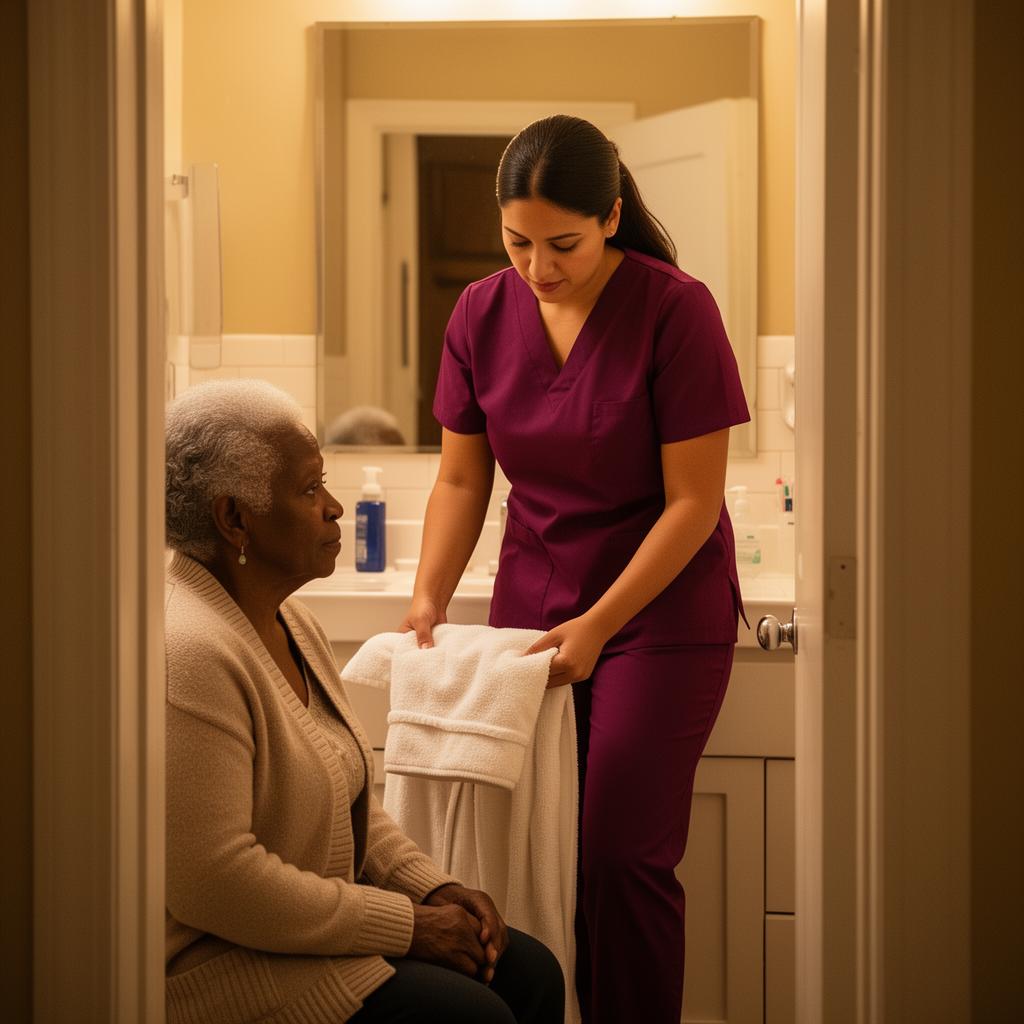
More than a third of fall injuries that send seniors to the ER start in the bathroom. Wet tile, low toilets, tub walls that have to be stepped over, and a half-asleep 3 a.m. trip add up to the most dangerous square footage in the home.
- •Grab bars beside the toilet and inside the shower — installed into studs, not drywall anchors. Towel bars are not grab bars and will rip out under real weight.
- •Non-slip mat inside the tub and a low-pile rug with a rubber backing outside
- •Shower bench or transfer chair if standing for a full shower has become hard
- •Handheld showerhead so a seated shower is possible
- •Raised toilet seat (3-4 inches) if standing from a regular toilet takes effort
- •Motion-sensor nightlight that turns on automatically between bedroom and bathroom
- •Lever-style faucet handles instead of round knobs (easier on arthritic hands)
Worried about falls at home? We can do a free safety walk-through.
Bedroom, living room, kitchen — the other danger zones
Bedroom
- •Bed at the right height — feet should rest flat on the floor when sitting on the edge
- •Clear path from bed to bathroom, lit by a motion-sensor light
- •Phone within reach without standing up
- •Loose rugs removed or taped down with double-sided rug tape
- •A sturdy chair with arms used for dressing instead of standing on one leg
Living room
- •Cords routed along walls — never across walking paths
- •Furniture arranged so there is one clear lane through the room
- •Sturdy chairs with arms, no rolling chairs or low couches that are hard to get up from
- •Light switches reachable from the doorway so no one walks into a dark room
- •Recliners checked for stability — many older recliners tip when used as a push-off point
Kitchen
- •Most-used items between waist and shoulder height — no step stools
- •A sturdy stool with a back for sitting while chopping or stirring
- •Spills cleaned immediately, especially on tile
- •Stove auto-shutoff if cognitive change is in the picture
- •Grab handle near the back door step
After a first fall — what to do in the next 24 hours
The first 24 hours after a fall are the moment families most often miss. Even when nothing seems broken, a fall is a signal that something has changed — balance, blood pressure, vision, medication, or strength. Treat it as new information, not just bad luck.
- Check for hidden injury — slow bleeding, hip or wrist pain that worsens, a headache after hitting their head. When in doubt, get them seen.
- Reconstruct what happened. Time of day, what they were doing, what they were wearing on their feet, how long they had been up. Patterns matter.
- Review every medication added or changed in the last 90 days. Blood pressure, sleep, anxiety, and bladder medications are common culprits.
- Walk the spot where they fell. Is there a rug? A cord? Bad lighting? Something that needs to be fixed today, not next month.
- Call the primary care doctor within 48 hours. Ask for a fall workup and a PT referral.
- Plan for the next 30 days. The fear that follows a first fall is often more dangerous than the fall itself, and the only antidote is supported activity.
When to add caregiver support and what they do
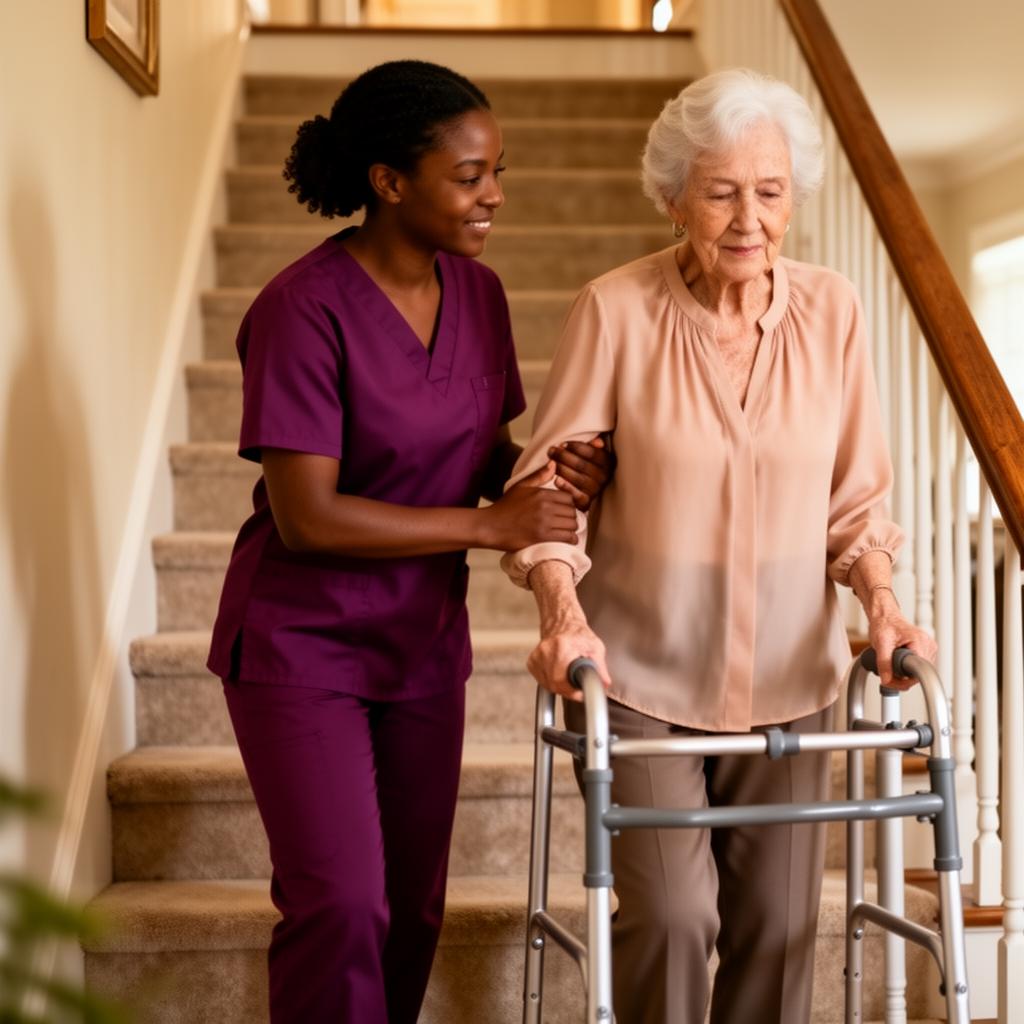
A trained caregiver does not hover. They are present for the moments that matter — transfers, bathroom trips, the walk from bedroom to kitchen first thing in the morning, the late-evening shower when balance is at its worst. They also see the home with fresh eyes and notice the loose railing or worn rug you stopped seeing months ago.
For most families, fall prevention support starts with two to four visits a week covering the highest-risk hours. From there it grows or shrinks based on what is actually happening. The goal is not to take over — it is to make sure the worst moments of the day are not faced alone.
If you are not sure where to start, our personal care assistance overview and our memory care guide both walk through how visits are typically scheduled around fall risk.
Medications that quietly cause falls (and how a clinically informed agency catches them)
Aging Gracefully brings clinical expertise, our caregiver training pays unusual attention to the medications that most often cause falls. Many seniors are on combinations that nobody has reviewed together — three blood pressure medications, a sleep aid, an anxiety medication, and a diuretic that sends them to the bathroom at 3 a.m. Each was prescribed for a real reason. Together, they are a fall waiting to happen.
- •Blood pressure medications — can cause sudden lightheadedness on standing (orthostatic hypotension)
- •Sleep aids and anxiety medications (especially benzodiazepines) — slow reaction time and balance
- •Bladder medications — increase nighttime trips to the bathroom
- •Pain medications, especially opioids — affect balance and judgment
- •Some antidepressants — can cause dizziness in the first few weeks
- •Over-the-counter sleep and allergy medications (Benadryl, Tylenol PM) — strongly linked to falls in older adults
Caregivers cannot change a prescription, but they can flag the pattern — "She gets dizzy every morning after her 8 a.m. pill" — so the family can bring it to the doctor or pharmacist. That single observation has prevented more falls than any grab bar.