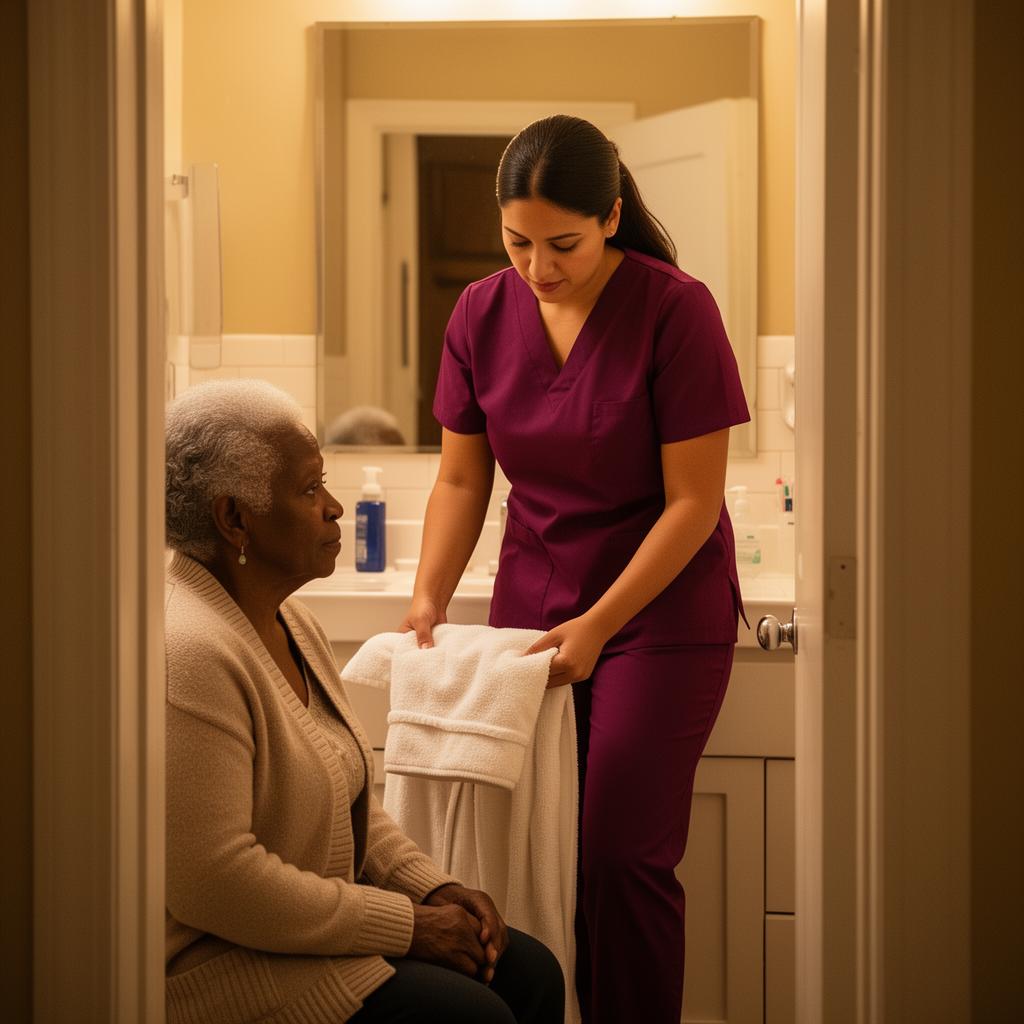

Why parents resist help (and why it's almost never about you)
When a parent says no to help, what you are usually hearing is not stubbornness. It is grief, fear, and identity all at once. They are not really arguing about a caregiver; they are arguing with the version of aging they were dreading. Once you understand what is actually being said no to, the conversation changes.
- •Pride — they raised you, took care of their own parents, ran a household. Accepting help feels like reversing that order.
- •Fear — that this is the first step toward a nursing home, that the next phone call will be about "a place," that they will lose the house.
- •Privacy — they do not want a stranger in their bedroom, their bathroom, or their refrigerator.
- •Cost — they are worried about being a financial burden on the family or burning through what they hoped to leave you.
- •Identity — accepting help feels like becoming a different person, an old person, someone they have never been before.
- •Loss of control — they have been in charge of their own days for 70+ years. A schedule that someone else makes feels like the end of that.
The conversation framework that actually works
Reframe the entire conversation away from "you need help" and toward "I need help worrying about you." That single shift changes the conversation from a verdict on them to a request from you. Most parents will accept something for their child that they would never accept for themselves.
- Pick the right time. Not after a fall, not in the doctor's office, not at a holiday with the whole family. A quiet morning, just the two of you.
- Lead with what you have observed, with dates and specifics — not labels. "I noticed three weeks of unopened mail" lands; "You are slipping" starts a fight.
- Move to your own feelings. "I am losing sleep over this" or "I worry every time the phone rings." Most parents respond to your stress more than their own.
- Offer the smallest possible step. Not a caregiver five days a week — a helper for two hours on Saturday mornings.
- Frame it as a trial, not a decision. "Let's try this for a month and then talk about how it is going." Almost no parent who agrees to a month wants to stop.
- Give them a veto. "If you do not like this person, we will find someone else. If after a month you hate it, we stop." Control is what they are afraid of losing — give some back.
What NOT to say (the phrases that backfire)
Some sentences kill the conversation before it starts. We have heard them all in family meetings, and we can usually predict the answer before the parent opens their mouth.
- •"You can't do this anymore." Translation in their ears: "You are done." Triggers a defensive no every time.
- •"We need to talk about getting you some help." The royal "we" feels like an ambush, especially if siblings are involved.
- •"Dad, you're not safe." Almost guaranteed to produce "I have lived here 40 years and I am fine."
- •"It's not that bad — we're just being careful." Then why are we having this conversation? Either be honest or wait.
- •"This is just for now." If they sense it is not just for now, they will dig in harder.
- •Bringing it up in front of the doctor without warning. Feels like a setup, even when it is not.
- •Bringing it up at a holiday gathering with all the siblings. Feels like a tribunal.
Need a third party to help start the conversation? We can join you.
How to introduce a caregiver without it feeling like surveillance
The first visit is everything. Get it right and the same parent who said "I do not need this" will be asking when she is coming back. Get it wrong and you may not get a second chance for months.
- •Choose a caregiver who matches your parent's pace — quiet with quiet people, talkative with talkative people. We screen for fit, not just availability.
- •Start with the easy task, not the hardest one. Companionship, a shared meal, a load of laundry. Bathing and personal care come after trust is built.
- •Have the caregiver come with you the first time, so the introduction is friendly rather than functional.
- •Use the word that feels right to your parent. Not everyone wants to call it "caregiver" out loud — "helper," "the lady who comes Saturdays," or "my friend Maria" all work.
- •Resist the urge to oversell. Let your parent decide whether they like the visit, on their own terms, by the end of the first hour.
When safety overrules autonomy — and how to navigate that line
There is a real line where a parent's right to make their own choices runs into a level of risk that the family cannot live with. Wandering with dementia, repeated falls, fires in the kitchen, medication overdoses. When you reach that line, the conversation changes from "will you accept help" to "this is what we are doing because we love you, and your job is to tell us how to do it in a way you can live with."
Even then, autonomy matters. Let your parent choose the caregiver from two options. Let them choose the days. Let them keep the parts of their routine that are theirs. Most resistance softens when the choices that remain are real choices, not the appearance of them.
When to involve siblings, doctors, or a geriatric care manager
If you have tried twice and your parent is still refusing, expand the circle — but carefully. Wrong: a Sunday-dinner ambush with all the siblings. Right: one sibling at a time, in private, having the same conversation with the same observations.
- •The primary care doctor — a brief note to the office before the next appointment listing what you have observed lets the doctor raise concerns from a position of authority.
- •A trusted clergy member, family friend, or longtime neighbor — sometimes the message lands differently from someone who is not their child.
- •A geriatric care manager — for the most complex situations, an independent professional who can assess and mediate.
- •Our team — for many families, a free in-home visit by us turns the abstract "caregiver" into a real, friendly person they can imagine in their kitchen.
If you suspect there are already signs of decline, our guide on the 10 signs a loved one may need home care helps you bring concrete observations to the conversation.