
What "aging in place" actually requires (and what it doesn't)
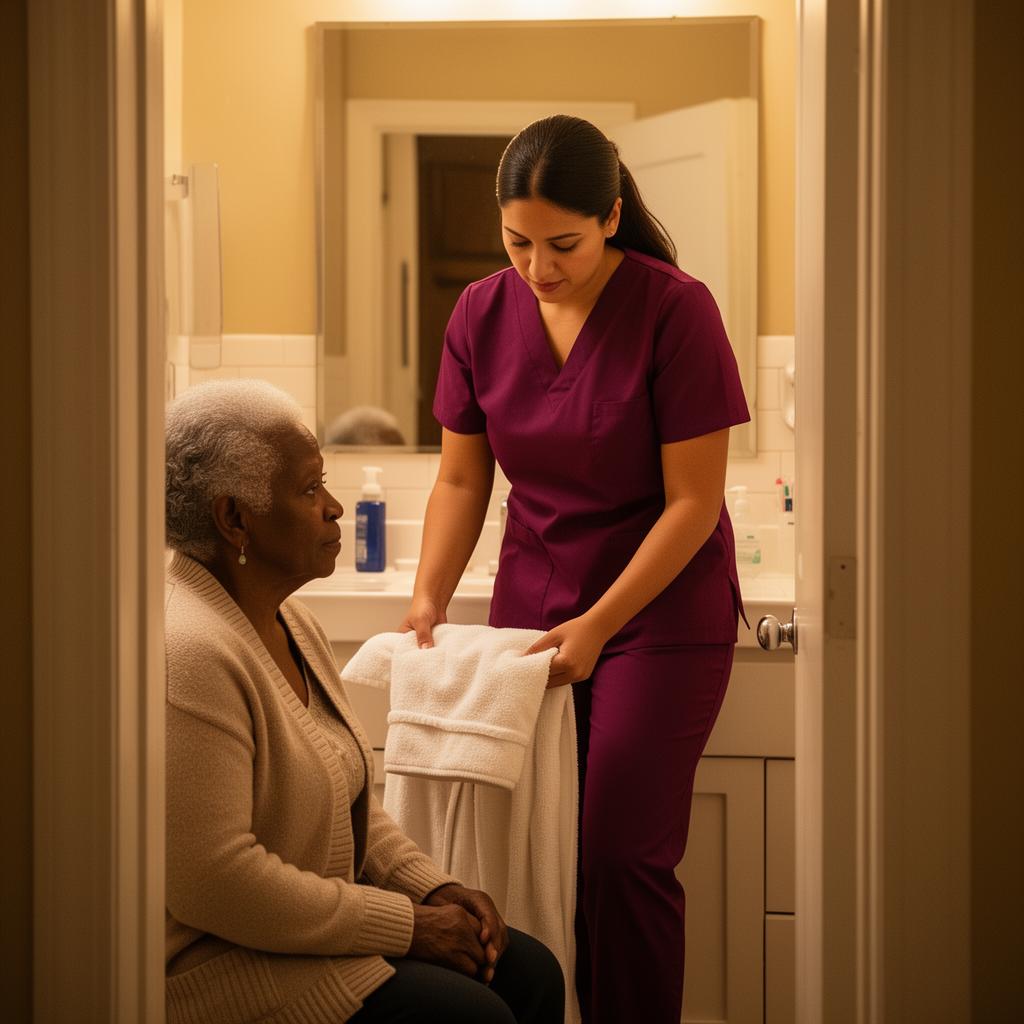
Aging in place does not mean the house has to be perfect. It means the home, the routines, and the support around your parent can adapt as their needs change — without needing a move. Most families can age in place successfully with three things: a safer physical environment, a daily routine that matches their current capability, and the right amount of human support added at the right time.
What it does not require: a $30,000 bathroom remodel, smart-home technology your parent will not use, or a perfect house. Many of our clients live in 60-year-old homes in Mid City or Sherwood Forest with original layouts and stay safely at home into their late 80s. The homes that work are the ones where the family has done the small things consistently and added support before a crisis.
The free changes — rugs, lighting, cords, clutter
Before spending a dollar, walk every room and do these. They cost nothing and prevent more falls than any single product:
- •Remove every loose throw rug, or tape them down with double-sided rug tape. Throw rugs cause more falls than any other single thing in the house.
- •Route every cord along walls. Nothing crosses a walking path — phone chargers, lamps, oxygen tubing.
- •Clear walking lanes through every room. One clear path, even if it means moving furniture you have had in the same spot for 20 years.
- •Replace every burned-out bulb in the house, especially in hallways, bathrooms, and stairs. One dim hallway is a fall waiting to happen.
- •Move daily-use items to between waist and shoulder height. No step stools, no bending to floor cabinets for the cereal.
- •Take a hard look at recliners and dining chairs. Anything wobbly or low gets removed or replaced before it becomes the chair someone falls out of.
- •Put a phone in every room. A fall victim who cannot reach a phone for hours has a much worse outcome than one who can call for help in five minutes.
The under-$200 changes that prevent the most accidents
If you can spend a few hundred dollars on safety, this is the order to spend it. Each item below has a higher safety return than almost anything else you can buy.
- •Grab bars in the bathroom — beside the toilet and inside the shower. About $30-40 each. Must be installed into wall studs, not drywall anchors.
- •Motion-sensor nightlights — bedroom, hallway, bathroom. About $10-20 each. The 3 a.m. bathroom trip is the highest-fall-risk moment of every day.
- •Non-slip mat inside the tub plus a low-pile rug with rubber backing outside. About $30 for both.
- •Raised toilet seat with handles — about $40-60. Standing from a regular toilet becomes hard years before most families notice.
- •Shower bench or transfer chair — about $50-100. Turns a dangerous shower into a calm one.
- •Handheld showerhead — about $30. Lets your parent sit and rinse instead of standing for the whole shower.
- •Lever-style door and faucet handles — easier on arthritic hands. Replace a few at a time as you go.
- •Lockbox by the front door so EMS or family can enter in an emergency without breaking a window.
Want help spotting risks in the home? We do free walk-throughs.
Bigger investments — bath modifications, ramps, stair lifts
When the basic changes have been done and the home still does not feel safe, these are the next-tier investments. They are real money, but they extend aging-in-place by years for the right family.
- •Walk-in shower or tub-to-shower conversion — typically $5,000-12,000. The single highest-impact remodel for older adults. Eliminates the tub wall, which is the most common bathroom hazard.
- •Exterior ramp — $1,500-4,000 depending on length and material. Required if a wheelchair or walker becomes part of daily life.
- •Stair lift — $3,000-6,000 for a straight staircase, more for curved. Often pays for itself the first month a parent can stay upstairs in their own bedroom.
- •Widened doorways — about $500-1,500 per doorway. Becomes important if a wheelchair or walker is in the picture.
- •Bedroom or full bath added to the main floor — the largest investment, but for two-story homes it is often the difference between aging in place and moving.
Smart home tech that actually helps seniors (and what to skip)
Smart-home technology is sold to families as the answer to aging in place. Most of it is not. The pieces that genuinely help are the simple ones — the ones that work without your parent having to learn a new app.
What helps:
- •Medical alert pendant or watch — the original "I've fallen and I can't get up" system, now better than ever. About $30-50 a month. The single best technology investment for living alone.
- •Smart doorbell with camera — lets family see who is at the door without your parent opening it for strangers.
- •Voice assistant (Echo or Google) for hands-free calls and reminders, set up by family so it just works.
- •Stove auto-shutoff device — about $200-400 installed. Turns the burner off after a set time. Critical if cognitive change is in the picture.
- •Simple GPS tracker on the car or in the wallet, for early dementia.
What to skip: complicated whole-home automation, anything that requires logging into a phone app, anything that depends on a perfect Wi-Fi signal in a 60-year-old house, and any device sold by a salesperson who has not asked what your parent actually has trouble with.
When the house can't be made safe — and what to do then
Some homes are not realistically aging-in-place homes. Two flights of stairs to the only bathroom, a layout that cannot fit a walker, a yard that floods every storm, a location 45 minutes from the nearest family. Forcing it does not make it work — it just delays a harder decision and uses up the savings that could have funded a better one.
Signs the house itself is the problem rather than the support around it: every safety modification still leaves a critical risk; the cost of modification approaches the cost of moving; the only way to make it work is 24/7 in-home care indefinitely; or your parent has already had two serious falls in the same room despite changes.
When that is the situation, the real options are downsizing to a single-story home, moving in with family with caregiver support layered on top, or transitioning to assisted living. Our comparison of home care, assisted living, and nursing home can help you weigh those.