
The decision Baton Rouge families face most
By the time a family sits down to weigh home versus facility, the dementia has usually been in the picture for a year or more. The early stage is over. Sundowning is real. Showers are a battle. The spouse hasn't slept through the night in months, or the adult daughter is driving across Baton Rouge twice a day. The question on the table isn't 'home or facility?' as if both options were neutral. The question is 'what changes for whom, and what do we lose if we change it?' That is the conversation worth having.
What memory care at home actually looks like
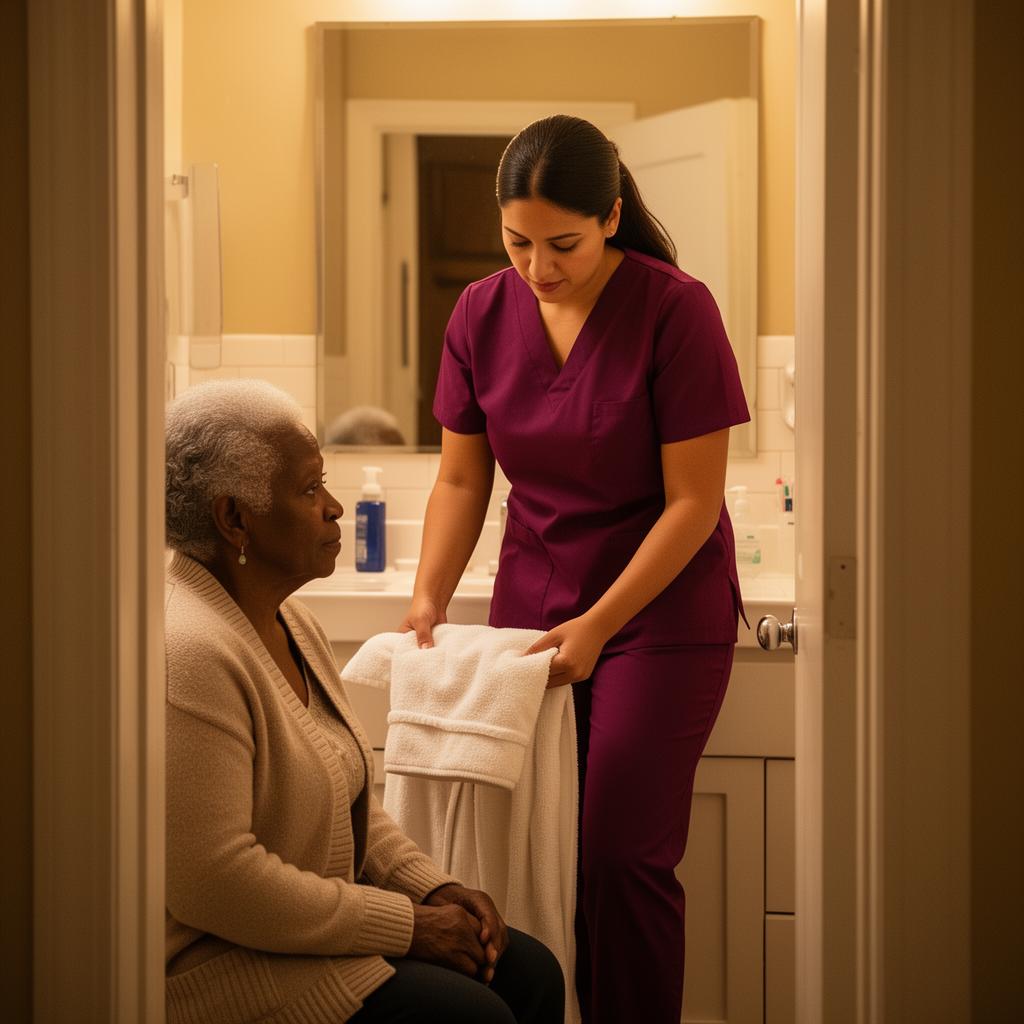
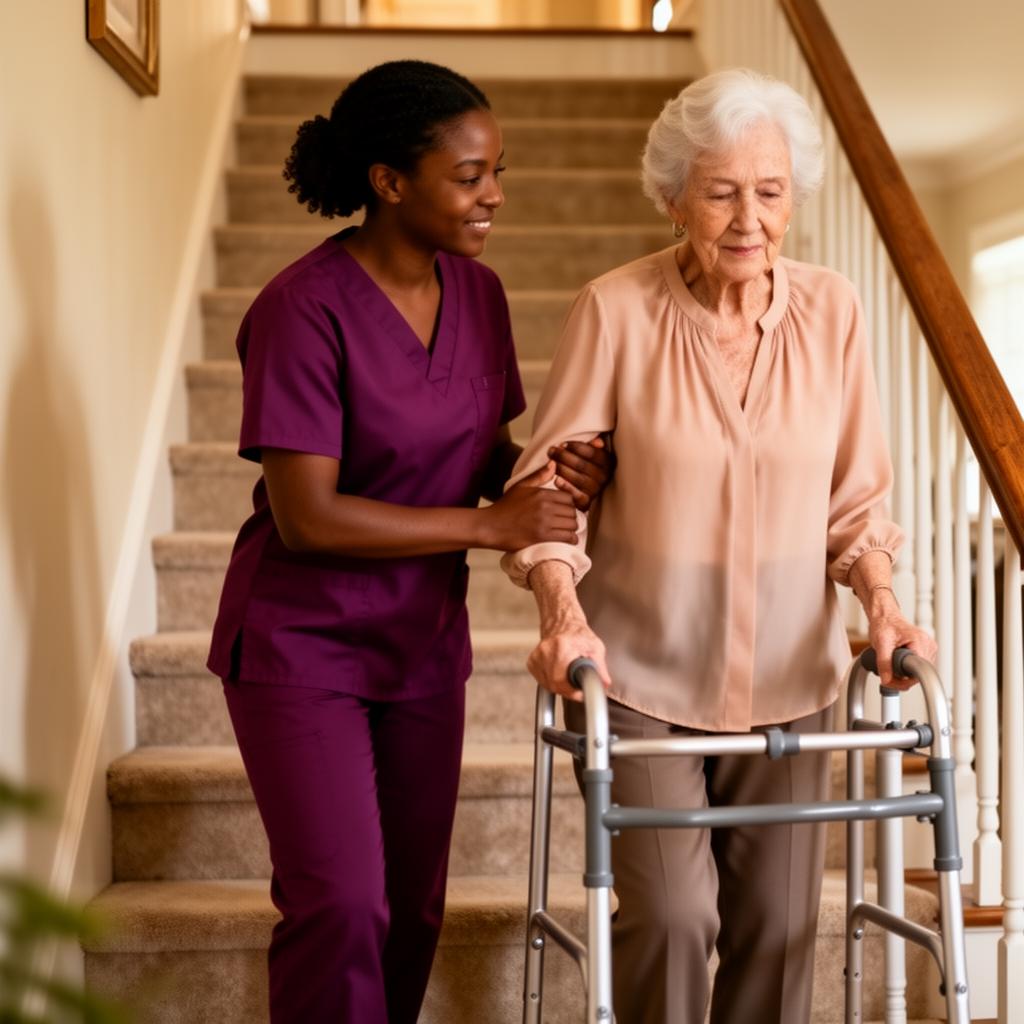
At Aging Gracefully, memory care at home means caregivers trained in dementia communication — validation, redirection, cueing — working scheduled shifts in the senior's own home. Common patterns: a morning shift to anchor breakfast and bathing; an afternoon shift for engagement and movement; an evening shift to soften sundowning; an overnight shift to manage wandering and bathroom safety. Plans are individualized; some families need 20 hours a week, others 168. Aging Gracefully brings clinical expertise, every plan also includes a medication review for drugs that worsen cognition, sundowning, or fall risk. The home itself becomes the memory aid: the same chair, the same window, the same garden, the same dog.
What a memory care facility actually looks like
Memory care facilities in Baton Rouge are typically secured units inside an assisted living community or stand-alone communities licensed by the Louisiana Department of Health. Residents have a private or shared room, share dining and activity space, and benefit from 24/7 trained staffing, locked exits to prevent elopement, and structured daily programming. Monthly costs in the Baton Rouge market typically run $5,500 to $8,500, sometimes higher for high-acuity care. The strength of a good memory care facility is environmental — every door, every hallway, every dining room is designed for someone with dementia. The cost is what is given up to live in it.
Trying to decide between home and a facility? We can talk through it.
Cost comparison — home vs. Baton Rouge memory care facilities
At 20 to 40 hours per week of in-home memory care, home is significantly less expensive than facility placement. As care needs grow toward 24-hour supervision, the math shifts. Twenty-four-hour shift care can run $14,000 to $18,000 per month, well above facility cost. Live-in care (one caregiver staying in the home with built-in rest periods) is less expensive than 24-hour shift care and is often the bridge that keeps the math workable. The crossover point for most Baton Rouge families is somewhere between 60 and 80 caregiver hours a week. Below that, home wins on cost. Above that, the facility usually wins on cost, though not always on quality of life.
Safety — the real risks at home and at a facility
A memory care facility is safer for elopement (locked exits, secured outdoor spaces) and for true 24/7 supervision (someone is always awake). A trained in-home caregiver is safer for falls in the most familiar environment, for medication errors caught by a one-on-one ratio, and for the cascade of confusion that follows when a person with dementia is moved into a new setting. Neither option is universally safer. The right answer depends on this specific person at this specific stage — the wandering pattern, the transfer ability, the family's ability to cover the riskiest hours, and the local options actually available.
Dignity, routine, and the question nobody asks: 'Where would they want to be?'
For many people with dementia, the home is the last consistent map. The chair by the window. The garden. The rosary on the bedside table. The smell of the kitchen. These are not decoration — they are the scaffolding for what is left of memory. Baton Rouge families who keep a loved one home through middle stage often describe a quieter, less anxious person than the one they see in shorter facility tours. That is not universal, but it is common enough to weigh. The question worth asking — and the one most adult children avoid — is the one their parent would have answered ten years ago: 'If it ever gets bad, where do you want to be?' Most parents already answered. Most families just never wrote it down.
Hybrid options — when home + day program is the right answer
There is a middle path that more Baton Rouge families are choosing: home as the base, plus an adult day program two or three days a week for structured social engagement, plus in-home caregivers for the rest. The day program gives the spouse or adult child a real break and gives the person with dementia a richer week than home alone could provide. When facility placement eventually becomes necessary, many families bring private home caregivers into the facility — a familiar face who continues to visit several times a week eases the transition and protects the relationship that was already built.