
The first 30 days after discharge are the highest-risk window
When your parent is wheeled to the curb in a wheelchair on discharge day, the hospital's job is largely done. Yours is just starting — and the next 30 days will determine whether the recovery holds or whether the family ends up back in the ER. Statistically, the first 72 hours are the most fragile, and the first 7 days carry more than half of all readmission risk.
Why this window is so dangerous: your parent is weaker than they were before admission (every day in a hospital bed costs older adults muscle), they are on new medications they have not taken before, the discharge instructions were given fast and in a hallway, the home is not set up for new mobility limits, and the family is exhausted from the hospital stay itself. Every one of those is fixable with planning. Most families do not realize they need a plan until day three.
What hospitals don't tell you about coming home
Hospitals are good at acute care. They are not built to follow your parent home. There are several things that almost never get said clearly at discharge that matter enormously in week one:
- •Your parent will be weaker than they look. A 70-year-old loses meaningful muscle in 5 days of bed rest. The walk from the car to the bed on day one will surprise you.
- •Pain medications change everything for the first week — balance, alertness, appetite, bowels. The discharge nurse may not flag this.
- •New medications are often added without the old ones being clearly stopped. Bring every old bottle to discharge day. We have seen patients sent home with three blood thinners by accident.
- •Confusion in the first 48-72 hours is common and is not always dementia. Anesthesia, sleep deprivation, new medications, and dehydration all combine. It usually resolves — but you have to know to expect it.
- •Follow-up appointments are not always scheduled. If they are not on the calendar before you leave the hospital, they often do not happen.
- •The risk of falls in the first 30 days post-discharge is significantly higher than baseline. Our fall prevention guide covers what to set up at home before discharge day.
The discharge plan — what to demand before leaving
Discharge day is hectic and the temptation is to nod along and just get out of there. Slow it down. You are entitled to clear answers on each of these before your parent leaves the building:
- A complete written list of every medication your parent should take starting today, with what time, with food or without, and what each one is for. Compare this list to the bottles already at home. Reconcile out loud with the discharge nurse.
- Written warning signs that mean call the doctor and warning signs that mean call 911. Specific symptoms, not vague "if anything seems wrong."
- All follow-up appointments scheduled, with date, time, address, and the name of the person to ask for. Not "call to schedule."
- Equipment delivered or arranged before you leave — walker, wheelchair, hospital bed, oxygen, commode. Not "the company will call you."
- Home health referral confirmed if it is on the orders. Skilled home health is different from non-medical home care; you may need both.
- A direct phone number to a person — case manager, discharge planner, or doctor's office — you can call in the next 72 hours when something does not match the plan. There will always be something.
Just had a hospital discharge? We can start care today.
Medication reconciliation — the silent killer
The single most common cause of avoidable 30-day readmissions is medication confusion. A drug was added in the hospital but the old version is still in the bottle at home. A blood thinner was changed but no one stopped the old one. A pain medication was added that interacts with three things your parent already takes. The discharge instructions said "continue all home medications" without specifying which ones.
Aging Gracefully brings clinical expertise, our caregivers are trained specifically on what to watch for in the post-discharge window — the early signs of overdose, underdose, dangerous interactions, and side effects that look like a new illness but are really a medication issue. Caregivers cannot change a prescription, but they can be the eyes that catch the problem in time to call the pharmacist or doctor before it becomes an ER visit. Our medication reminders guide explains what that looks like in practice.
Practical steps for families on day one: bring every bottle from home to the hospital before discharge; have the discharge nurse go through them one at a time and label each as continue, stop, or change; throw away anything that is being stopped (do not leave it in the cabinet); fill new prescriptions on the way home, not tomorrow; and put one person — not a rotating cast — in charge of the medication list for the first 30 days.
How home care reduces 30-day readmission risk
In-home recovery care is not just hand-holding. It is targeted support during the specific hours and tasks that drive readmissions when they go wrong. A caregiver in the home for 4-8 hours a day during the first two weeks does several things that measurably reduce the chance of going back:
- •Helps your parent get safely from car to bed on discharge day, when they are weakest.
- •Sets up the home for new mobility equipment so the walker or wheelchair actually fits the space.
- •Provides medication reminders for new prescriptions and tracks which ones are being taken correctly.
- •Watches for the specific warning signs that mean call the doctor (new confusion, leg swelling, shortness of breath, wound changes) before they become an ER trip.
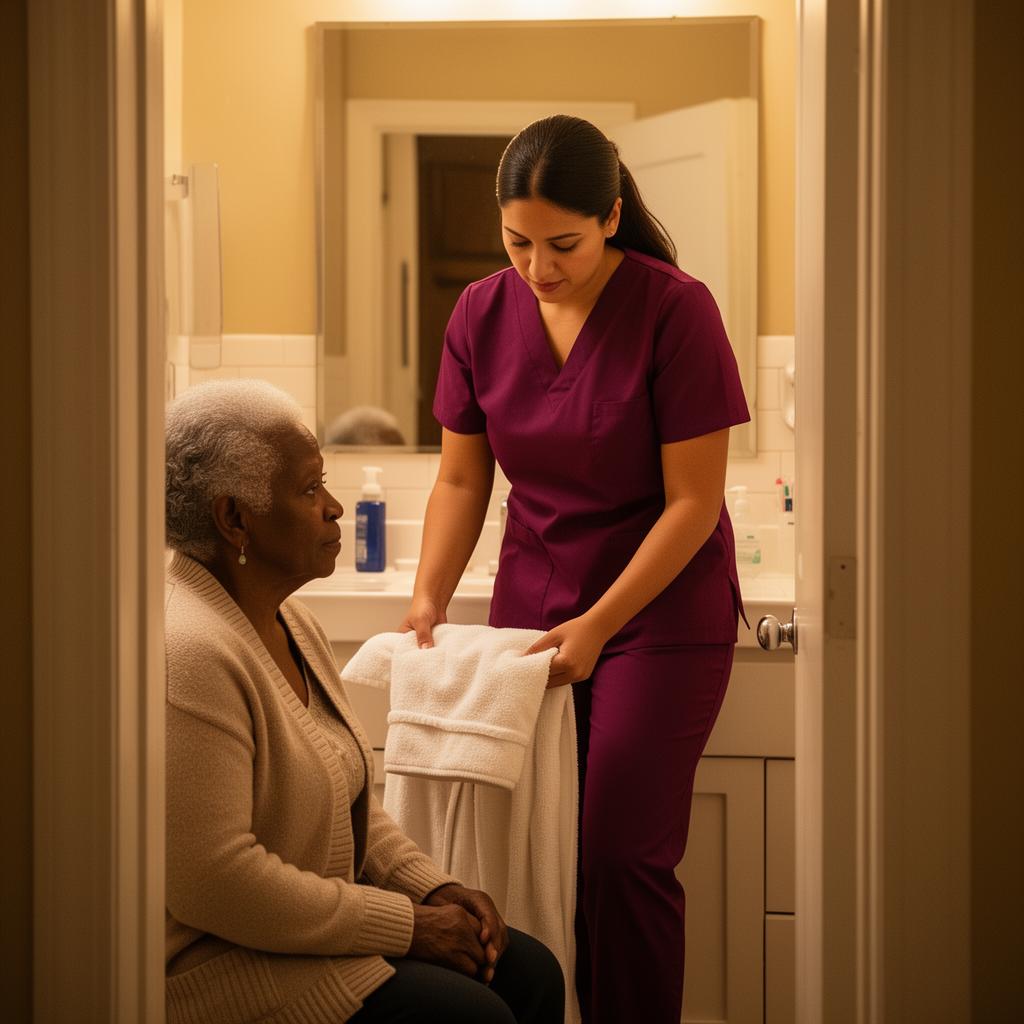
- •Handles personal care during the period when independence is limited — bathing safely with a new incision, dressing around limited range of motion.
- •Cooks meals that fit new dietary restrictions (low sodium, diabetic, soft food after dental or stomach surgery).
- •Coordinates with home health when skilled nurses or therapists are visiting, so nothing falls between the cracks.
Coordinating with home health (different service, also helpful)
Home health and home care are often confused, which is a problem because they do different jobs and most successful recoveries use both. Home health is short-term, medical, and ordered by a doctor — skilled nurses, physical therapists, occupational therapists, sometimes a social worker, usually 1-3 visits per week for several weeks, generally covered by Medicare after a qualifying hospital stay. Home care (what we do) is non-medical, ongoing, and chosen by the family — personal care, meals, companionship, mobility help, medication reminders, daily presence, scheduled by the hour or shift, and not typically covered by traditional Medicare.
Home health visits are short and infrequent. Home care fills the days between them. The nurse comes Tuesday morning to check the wound. The PT comes Thursday afternoon to work on walking. The home caregiver is there Monday through Friday from 9 to 1, doing the daily work that holds the recovery together. Our comparison of home care vs. home health walks through how to use both together.