The 7 stages of dementia, in plain English
Clinicians use a 7-stage scale (the Global Deterioration Scale) to describe how Alzheimer's progresses, but most families never see it written down in language that makes sense at the kitchen table. Stages 1 and 2 are essentially normal aging — occasional forgetfulness that doesn't affect daily life. Stage 3 is mild cognitive impairment: the misplaced keys, the repeated story, the missed appointment. Stage 4 is early dementia, when complex tasks like finances and travel start to slip. Stage 5 is mid-stage — the person needs help choosing clothes, remembering recent events, or managing medications. Stage 6 is moderately severe: significant memory loss, behavior changes, incontinence, and round-the-clock supervision become reality. Stage 7 is late-stage: limited speech, full physical dependence, and a slow, gentle goodbye.
These stages are not a calendar. People move through them at different speeds, and some plateau for years. What the stages do give a family is a shared vocabulary — so the spouse, the adult children, and the care team are talking about the same thing.
Early stage — what to start doing now
Early dementia is the time to set things up, not wait. The routines a person settles into now will feel like home later, and a caregiver who is introduced now becomes a trusted face long before they are truly needed. Baton Rouge families who plan early are the ones who don't end up in a crisis at year three.
- •Get the legal documents in place — durable power of attorney, healthcare proxy, advance directives, and a Louisiana POLST if appropriate.
- •Simplify finances: autopay every recurring bill, consolidate accounts, and add a trusted family member as a view-only signer.
- •Start a memory routine — photos, music from the person's young adulthood, a written life story, familiar objects displayed where they can be seen.
- •Introduce a caregiver for a few hours a week, framed as 'company' or 'help around the house' rather than 'care.'
- •Map the home for safety: stove safety knobs, locked medication cabinets, gentle nightlights, and grab bars in the bathroom.
Middle stage — when home care typically begins
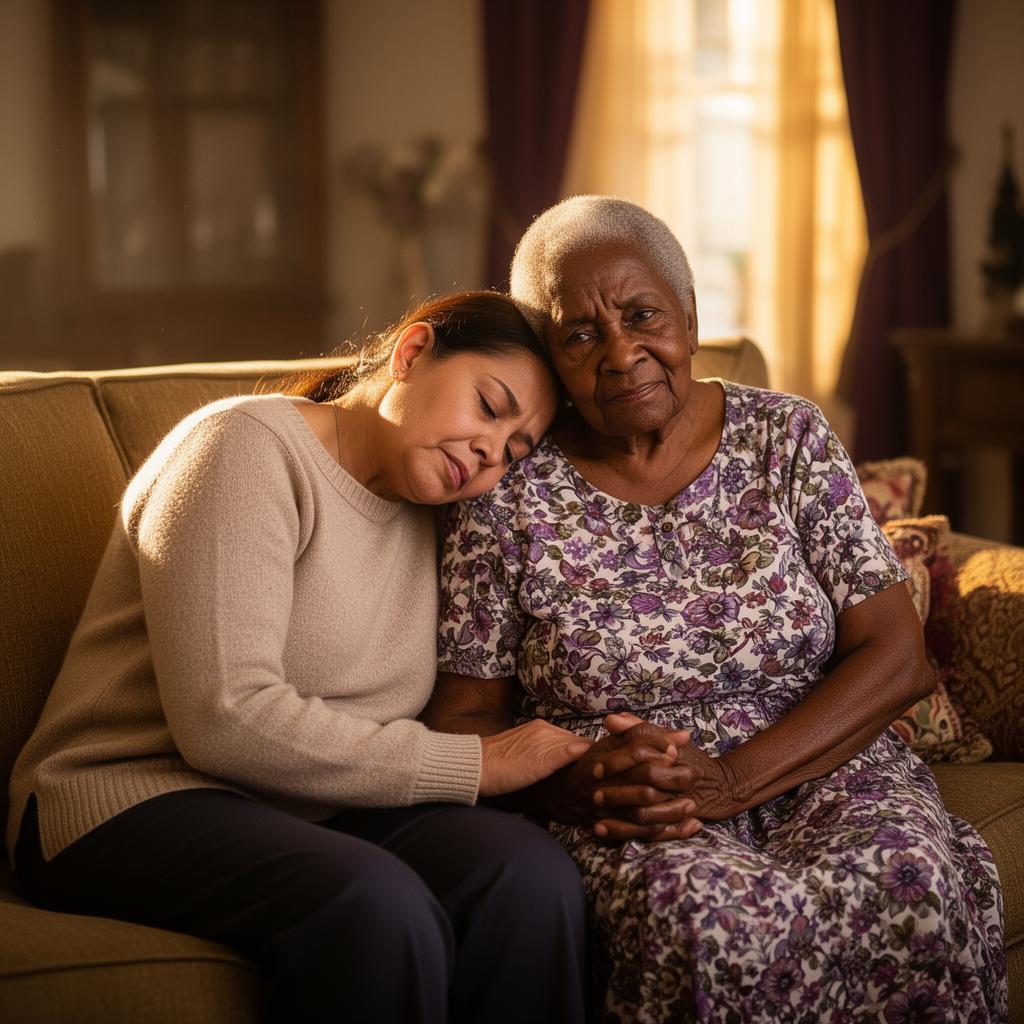
Middle stage is when most Baton Rouge families call us. The family caregiver — usually a spouse or an adult daughter — has hit the wall. Days are long, repetitive, and unpredictable. Sundowning has started. The shower has become a battle. The same question is being asked twenty times an hour. This is exactly the stage a trained dementia caregiver is built for.
- •Personal care that respects dignity, never argues, and uses redirection instead of correction.
- •Structured days — same time meals, same calming evening routine, predictable rhythm.
- •Wandering prevention through engagement and environment, not locks or restraints.
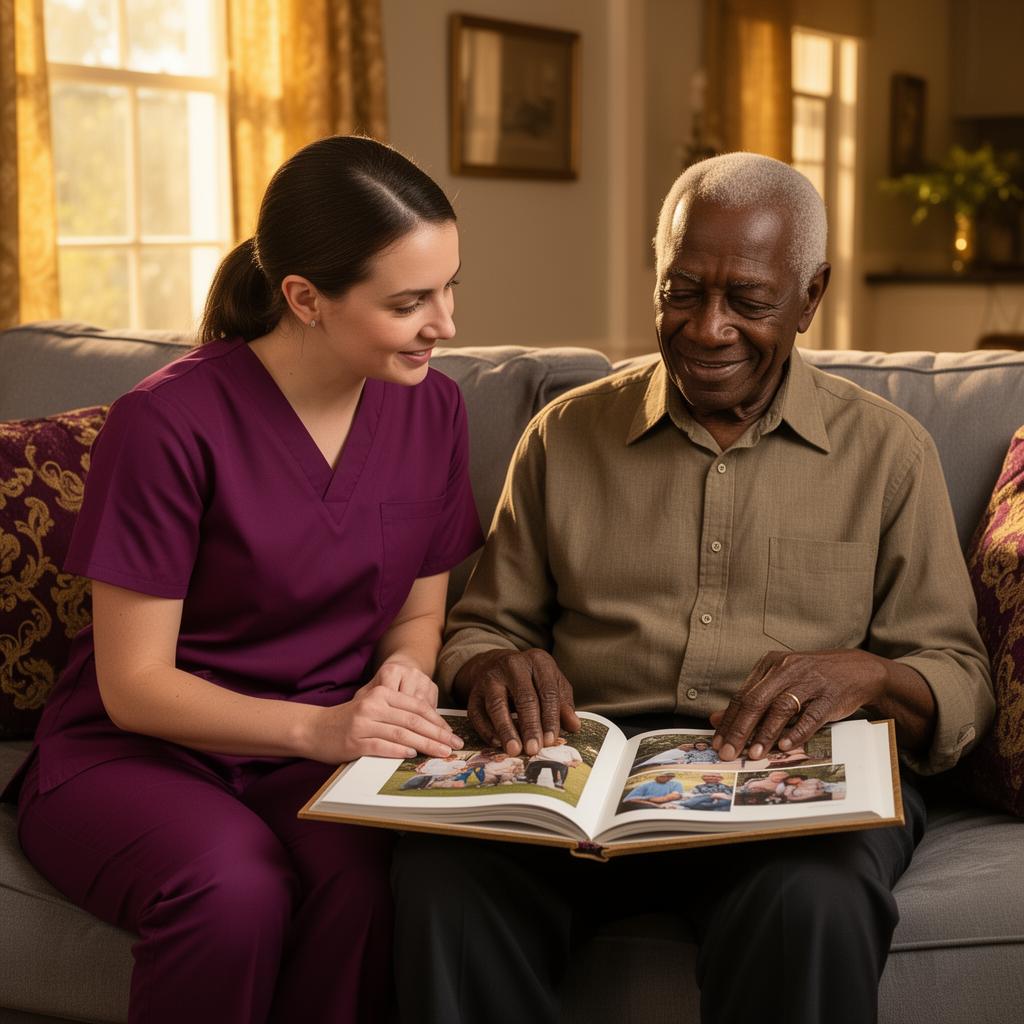
- •Real activities that meet the person where they are: music, photo albums, simple cooking, gardening, prayer.
- •Family communication after every shift — what changed, what worked, what didn't.
Watching dementia progress? Let's talk about what comes next.
Late stage — keeping your loved one home longer
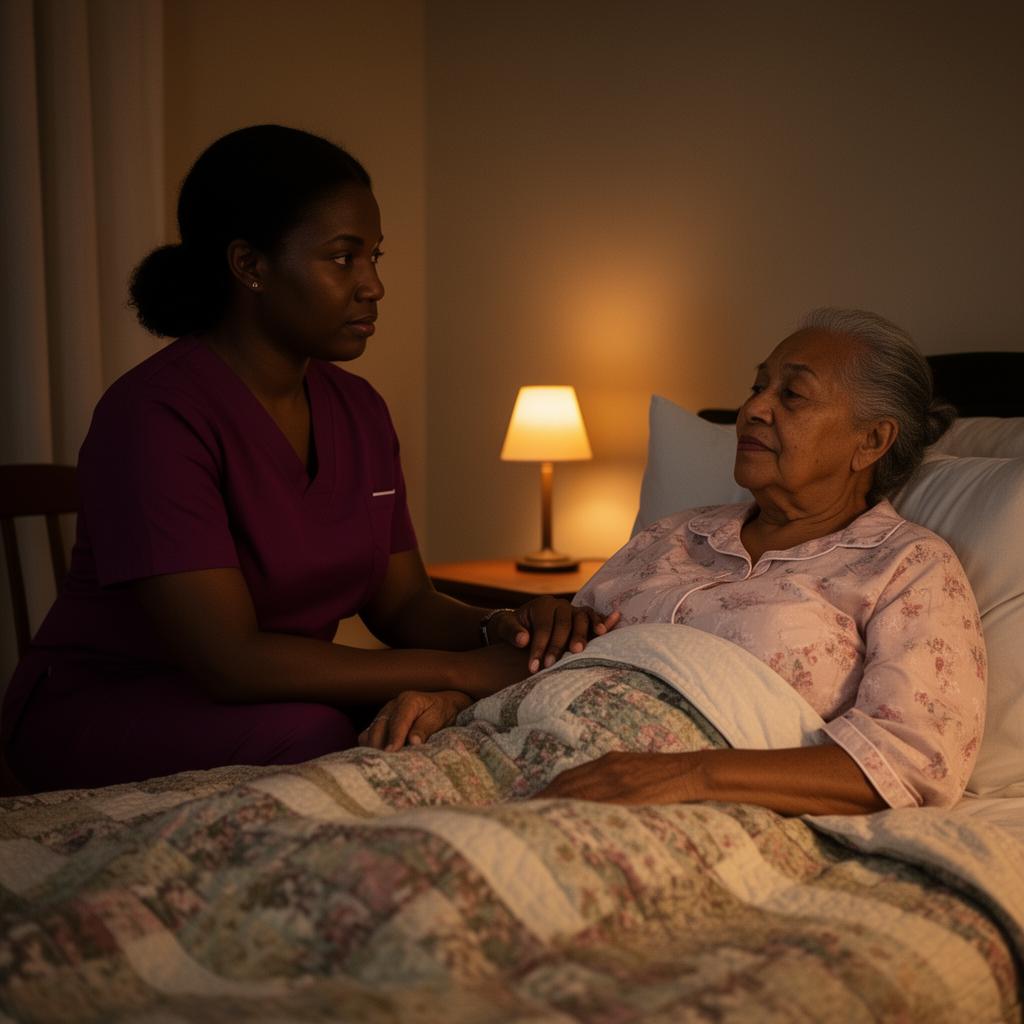
In the late stage the world becomes smaller and slower. Care shifts toward comfort — gentle hands during transfers, soft music, familiar voices, warm food easy to swallow, the touch of a hand. Many Baton Rouge families add hospice alongside in-home caregivers at this point so the whole team is in place. With overnight coverage, two-person transfers when needed, and skin and mouth care done right, late-stage dementia at home is not only possible — it is often more peaceful than a facility.
The behaviors that families struggle with most
Three behaviors send more families into a tailspin than anything else: sundowning, wandering, and refusal of care. Sundowning — late-afternoon agitation — almost always softens when the day is structured, the lighting is warm by 4 p.m., and a calm familiar person is present through the transition. Wandering is reduced through engagement, environmental cues (a curtain over the front door, a stop sign at exit points), and a predictable schedule that gives the brain less reason to look for an escape. Refusal of care — especially around bathing — is rarely about the bath; it is about cold, fear of falling, modesty, or simply not understanding what is being asked. A trained caregiver enters that moment without arguing and almost always finds a way through.
When home is no longer safe — the honest signs
- •Repeated nighttime wandering toward the door, especially with attempts to drive or leave.
- •Falls that now happen even with a caregiver present, or transfers that consistently require two people.
- •The primary family caregiver's own health, marriage, or job is breaking — that is itself a medical emergency.
- •Behaviors (aggression, exit-seeking, paranoia) that put either the senior or others at real risk.
- •Medical needs that exceed what a non-skilled home care plan can meet, even with a nurse visiting.
Seeing one of these does not mean a facility tomorrow. It means it is time for an honest family conversation, ideally with a professional who has walked dozens of Baton Rouge families through this same hill. Our companion guides on memory care at home vs. facility and the 7 signs it's time for memory care go deeper.
How Aging Gracefully's dementia training works
Our caregivers receive specific dementia training — not generic home care training with a dementia chapter at the end. They learn validation therapy, redirection, cueing, transition rituals, and the subtle difference between agitation caused by pain, hunger, fatigue, or fear. Aging Gracefully brings clinical expertise, every memory care plan also includes a medication review for drugs that worsen confusion, sundowning, or fall risk. That combination — clinically informed plans plus caregivers trained for the disease — is what keeps Baton Rouge families home longer.