Why veterans need a different kind of in-home care
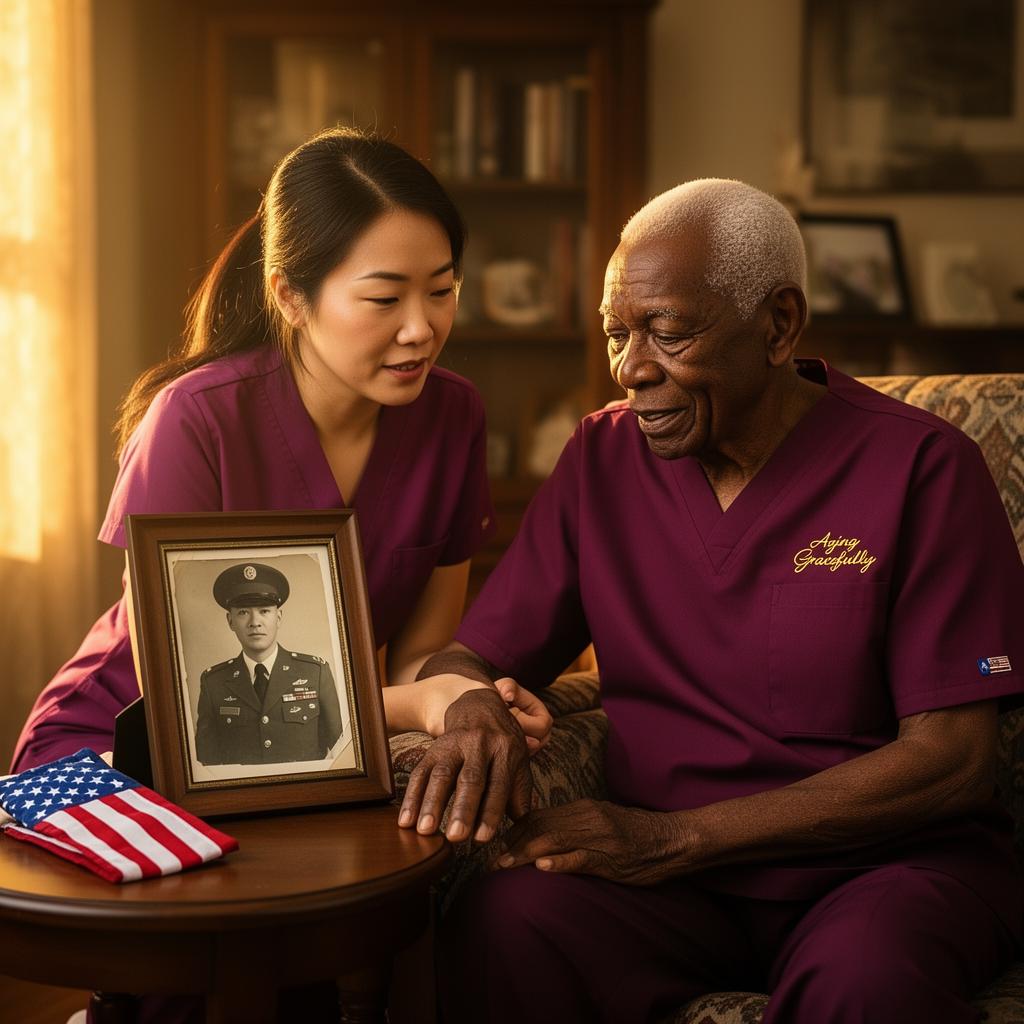
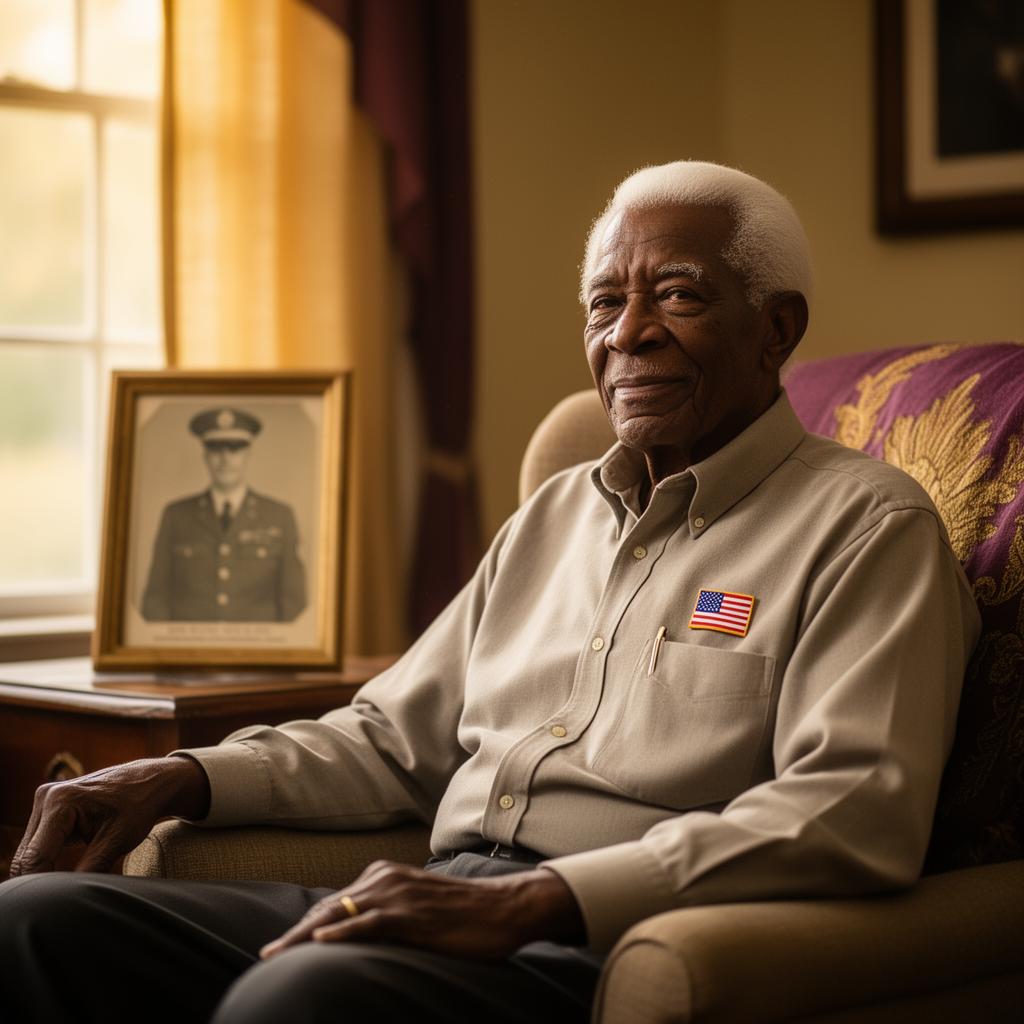
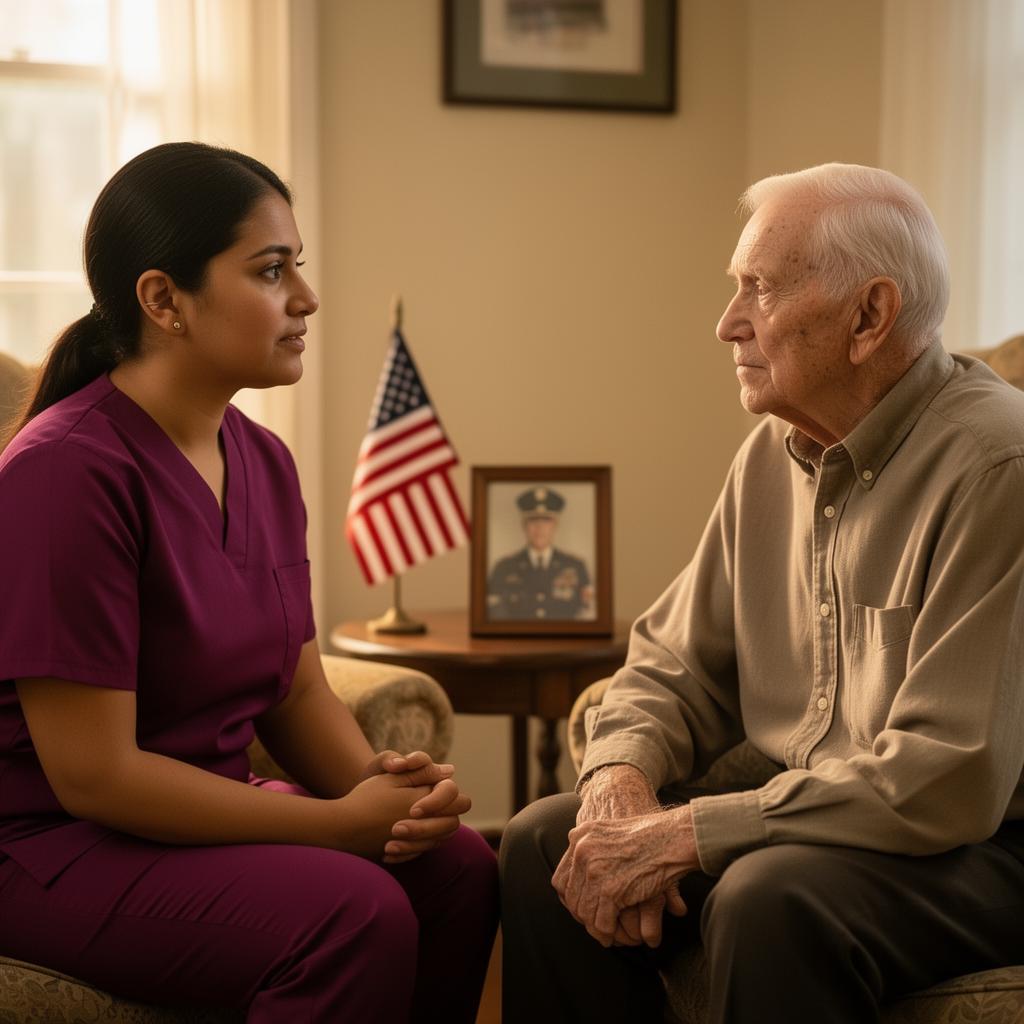
A veteran walking into late life is carrying experiences most caregivers will never share. For some, those experiences sit quietly in the background. For others — especially Vietnam, Gulf War, and post-9/11 veterans — they shape sleep, startle response, trust, touch, and how a stranger in the home feels. A caregiver who hasn't been trained for this can unintentionally trigger a response, and then everyone walks away from the experience feeling worse. Veteran-informed care is not a marketing label; it is a different posture, a different training, and a different way of moving through someone's house.
Trauma-informed caregiving — what it actually means
Trauma-informed caregiving is built on a few principles that change everything when they are practiced consistently. The caregiver assumes the person's reactions are wisdom, not weakness — the body remembers what the mind has set down. Predictability is treated as medicine: same caregiver, same schedule, same sequence of tasks. Touch is announced before it happens. Choices are offered, not removed. Silence is allowed. And the caregiver watches for what is happening underneath the surface — the clenched jaw, the change in breathing, the eyes scanning the room — instead of reacting only to the words spoken aloud.
- •Predictable routines — surprise is destabilizing for a veteran with PTSD.
- •Quiet voices, slow movements, plenty of warning before any touch or transfer.
- •No surprise visitors, loud noises, or rushed transitions through the day.
- •Trigger awareness — fireworks, sirens, certain rooms, anniversaries of difficult dates.
- •Permission for silence; presence without forcing conversation.
PTSD triggers in everyday care (and how trained caregivers prevent them)
Most PTSD triggers in home care are small and avoidable once a caregiver knows to look for them. A caregiver standing behind a veteran during personal care can feel threatening; trained caregivers stay in the visual field. Loud household sounds — a dropped pan, a slammed door — can land hard; trained caregivers narrate movement and close doors gently. Bath water that runs too suddenly, a wash cloth on the face without warning, a transfer without announcement: each one of these can become a flashback for the wrong veteran. We teach caregivers to slow down, to ask, to wait, and to read the room before they act.
Caring for a veteran loved one? Let's talk about what they need.
When PTSD meets dementia — a complicated combination
Memory loss can pull old experiences forward as if they are happening now. A Vietnam veteran in middle-stage dementia may believe he is back in country; a World War II veteran may try to make sense of a hospital corridor as a barracks. A trained caregiver knows how to ground without arguing — to acknowledge what feels real to him, then gently anchor him in the safe present using familiar music, photos, the smell of coffee, the sound of a spouse's voice. We never correct a veteran out of a flashback; we walk alongside him until the present comes back into focus.
How we match caregivers to veterans (it's not random)
Matching matters more for veteran clients than for almost any other group we serve. We consider gender preference (some veterans, especially around personal care, are far more comfortable with same-gender caregivers and we honor that without making it a discussion). We consider personality fit — quiet veterans usually don't want a chatty caregiver, and vice versa. When we have a caregiver on staff who is themselves a veteran or a veteran's spouse, we try to match accordingly. And once a match is working, we protect it: same caregivers, same days, same hours, for as long as the family wants.
Working with the VA New Orleans and Alexandria for in-home support
Most Baton Rouge veterans receive their VA care through the Southeast Louisiana Veterans Health Care System (headquartered in New Orleans) or the Alexandria VA Health Care System, depending on where they were enrolled. Both systems have social workers who can authorize in-home care through the Homemaker / Home Health Aide program, refer to Veteran-Directed Care, and connect families to respite. We coordinate directly with VA social workers, accept their authorizations, and make sure the family doesn't have to play telephone between the medical center and the home. Our deeper guide on veteran VA benefits in Louisiana walks through every program in detail.